






Incumbent telecom carriers Bharti Airtel, Vodafone Idea and Reliance Jio have asked the sector regulator TRAI to set up floor pricing for data services as early as possible while asking for continuation of forbearance for voice services.
In a letter to Telecom Regulatory Authority of India Chairman, COAI Director General Rajan Mathews said tariff correction in the current level of fierce competition is not possible by any service provider voluntarily and thus the only option available is prescription of a minimum tariff for mobile data service by the Authority.
At the same time TRAI would be aware that unlike mobile data, voice services are considered as essential services by the people mainly at the bottom of the pyramid and therefore would need to be continued under the present forbearance regime.
It said data tariffs in India are 50 times lower than that of the developed/developing economies. “Telecom service providers in the private sector — Bharti Airtel Limited, Reliance Jio and Vodafone Idea Limited — are in complete agreement that TRAI be requested to regulate tariffs by setting a floor price for data services,” said the Cellular Operators Association of India (COAI) Director General Mathews in a letter dated December 3, 2019, to the TRAI chairman Ram Sewak Sharma.
COAI represents India’s telecom service providers and network vendors excluding state-run Bharat Sanchar Nigam Limited (BSNL) and Mahanagar Telephone Nigam Limited (MTNL).
“Necessary orders as per the statutory provisions of the TRAI Act be issued urgently. We expect tariffs to be regulated and decided by TRAI will ensure that the telecom industry remains healthy and robust,” the letter stated.
The financially-strained telecom sector, sitting on a debt of more than ₹7.5 lakh crore, is further stressed following the recent adverse Supreme Court verdict asking telecom companies to pay due to the government settling a decade-and-a-half dispute on the interpretation of Adjusted Gross Revenue (AGR).
In the September quarter, Bharti Airtel and Vodafone Idea together posted highest loss of more than ₹75,000 crore.
The telecom body, citing TRAI data said overall average revenue per user (APRU) has come down from ₹141 in 2010, to₹118 in 2017, and to ₹80 a month.

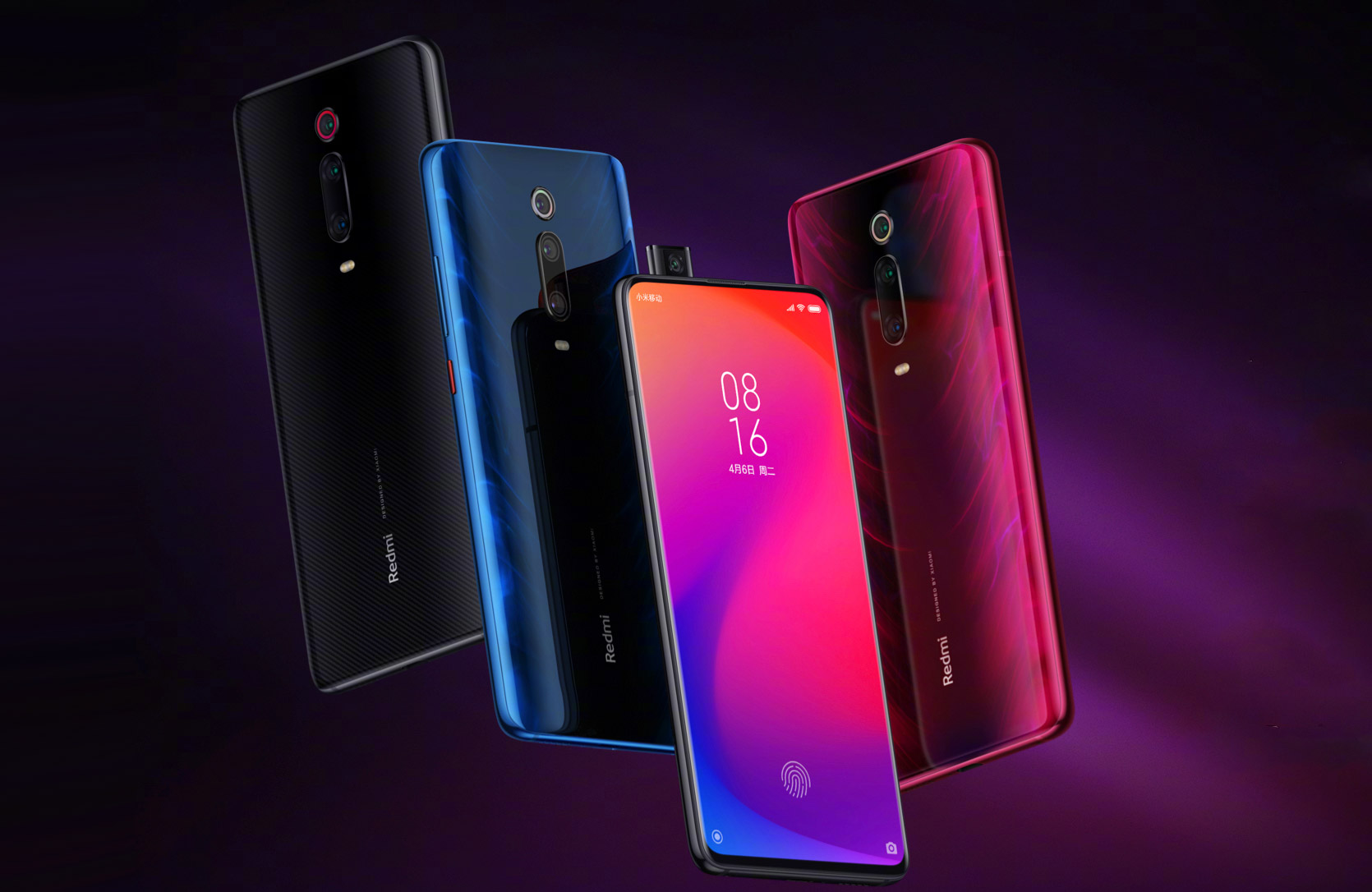
The Redmi K30 is coming on December 10 and by now we have a good overall idea what it will bring. The latest teasers from Redmi serve to confirm a few more of its specs.
Redmi posted two teasers on Weibo – one showing that the Redmi K30 will have a side-mounted fingerprint scanner and the other confirms that it will have 5G support on both SA and NSA networks.
The Redmi K30 will use a Snapdragon 730G chipset, while the K30 Pro will go with a Snapdragon 855+.
A third poster has appeared and it looks to confirm a Red variant of the upcoming Redmi K30 to come alongside the Lavender we’ve seen in previous teasers.
To rehash what we know about the Redmi K30 – it will have a dual-selfie camera built into a pill shaped punch-hole in the display. There is a 64MP main camera to go along with a 12MP ultrawide and 8MP telephoto.

And Xiaomi will unveil the phone on December 10.

Vivo has sent out media invites for a V-Series launch event in India on December 9, and the company is largely expected to launch the Vivo V17. The phone was launched in Russia a few days ago, and it sports a dewdrop notch and a diamond-shaped camera module at the back. The phone was also launched as the Vivo S1 Pro global variant in the Philippines a while back. Key specifications of the phone include a Snapdragon 665 SoC, a 48-megapixel rear camera, a 32-megapixel selfie sensor, and a 4,500mAh battery. The Vivo S1 Pro had been recently tipped to launch in India soon, thus, the speculation does seem to be warranted.
Vivo’s invite confirms that a new V-series phone is launching in India on December 9. While the invite doesn’t reveal the name of the phone, it is likely the Vivo V17 that will see a launch. The invite poster suggests a hole-punch display on the phone, while the Vivo V17 launched in Russia has a waterdrop-style notch.
A recent 91Mobiles report suggests that Vivo is looking to launch the Vivo V17 with a hole-punch display in India, instead of the waterdrop-style notch to give it a more premium look and feel – similar to that of the Samsung Galaxy S10. The report suggests that the specifications should be identical to the Russia variant. Another recent report by tipster Ishan Agarwal claimed that the Vivo S1 Pro would launch in India soon, and as the model is rebranded Vivo V17, this does seem to fit in with the Vivo V17 India launch speculation. To recall, the Vivo S1 Pro global variant launched in the Philippines is different from the Vivo S1 Pro China variant launched in May.
To recall, the Vivo V17 Pro has already launched in India a few months ago, and this variant sports dual pop-up selfie cameras, and a quad rear camera setup. The phone is priced at Rs. 29,990, and the Vivo V17 will be priced cheaper than the Vivo V17 Pro.
The Vivo V17 runs FuntouchOS 9.2 based on Android 9 Pie. It sports a 6.38-inch full-HD+ (1080×2340 pixels) Super AMOLED FullView Display. It is powered by an octa-core Qualcomm Snapdragon 665 SoC, bundled with 8GB of RAM. There is 128GB of storage onboard which is further expandable using a microSD card slot up to 256GB.
At the back, the Vivo V17 has a diamond-shaped quad rear camera setup with a 48-megapixel primary sensor with an f/1.8 aperture, an 8-megapixel ultra-wide-angle camera with an f/2.2 aperture and a 108-degree field of view (FoV). It also houses a 2-megapixel macro camera and a 2-megapixel depth sensor. For selfies, the Vivo V17 smartphone houses a 32-megapixel selfie camera sensor.
The V17 also has NFC for contactless payments and has support for dual fast charge. The smartphone has support for Bluetooth 5.0, dual 4G VoLTE, dual-band Wi-Fi among others. It has a USB Type-C port and packs in a 4,500mAh battery.

Black Friday is a big sale in the west but that doesn’t mean it can’t happen over here. The smartphone maker Xiaomi has announced its Black Friday Sale in India, which means one can expect some notable offers and discounts on ṭhe company’s products. The sale commences on Friday, November 29, and will go on till December 2. While the Mi A3will be discounted for the first time during the sale, the Redmi Note 7 Pro will also be up for sale at a lowered price, along with Poco F1, Redmi K20 Pro and many other handsets. Alongside smartphones, the company is also offering discounts on its accessories and ecosystem products such as the Mi Band 3, Mi LED Smart Bulb, Mi Bluetooth Speaker 2 and more.

Starting with the Mi A3, its 4/64GB and 6/64GB model will receive a Rs 500 discount and will be available for Rs 12,499 and Rs 15,499 respectively. The 6GB + 128GB version of the Redmi K20 Pro will be available for Rs 25,999 after a discount of Rs 2,000, while its 8GB + 256GB version will be priced at Rs 28,999. In addition, there’s a Rs 2,000 Bumped Up exchange offer on the K20 Pro. The Redmi K20 will also be discounted by Rs 2,000 so that its 6GB/64GB variant is available for Rs 19,999, while its 6GB/128GB version would cost Rs 22,999 after a Rs 1,000 discount.
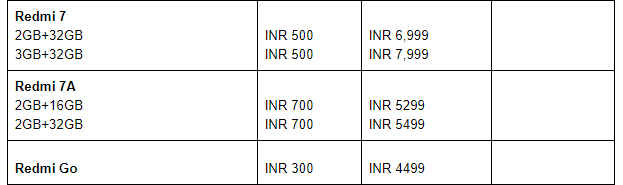
In the mid-range handset segment, the Redmi Note 7 Pro is getting some notable discount. The 4/64GB , 6/64GB and 6/128GB version of the handset will be discounted by Rs 2,000, Rs 3,000 and Rs 4,000 and will be available for Rs 11,999, Rs 11,999 and Rs 12,999 respectively. Redmi Y3’s 3GB RAM variant is being discounted by Rs 1,000 and will be available for Rs 7,999, while its 4GB RAM version costs Rs 9,999 after a Rs 2,000 discount. The Redmi 7, Redmi 7A and the Redmi Go will also be available at a discounted price, as shown in the image below.
Xiaomi will also slash the prices off from some of its accessories like the Mi Band 3, which will be available for Rs 1,599 and the Mi Smart LED Bulb, which will cost Rs 999. The Mi Pocket Speaker 2 will be discounted by Rs 500 and will be available for Rs 999, while the Mi Air Purifier 2, Mi Car Charger and Mi Router 3C will be available on lowered prices during a flash sale. Xiaomi will be hosting flash sales during the Black Friday Deals at 10 PM, 4 PM and 6 PM. Additionally, there’s a 10 percent additional instant discount on all HDFC debit and credit cards on Mi.com, Flipkart and Amazon.

Amazfit recently launched its Bip Lite wearable in India, priced at Rs. 3,999. This model is more affordable than the Amazfit Bip which was priced at Rs. 5,499 at launch. The new wearable claims 45 days of battery life on a single charge and is capable of heart-rate and sleep tracking. This device also supports activity tracking, which should help you log your runs. The main difference between the two models is that unlike its more expensive sibling, the Bip Lite lacks integrated GPS + GLONASS.
With so many affordable fitness wearables already on the market, does the Amazfit Bip Lite have enough in terms of features, and does it deliver the performance and accuracy we’re looking for? We put it to the test to find out.

The name says it all, doesn’t it? This is a toned-down version of the Amazfit Bip, and has a similar design. The device has a squarish face with chunky bezels on all sides. Amazfit has plastered its name on the space below the screen. The Bip Lite has a 1.28-inch reflective always-on display with Corning Gorilla Glass 3. It also seems to have an oleophobic coating which helps keep fingerprints off. There is a single button on the Bip Lite, on the right side, which is the wake/back button. You have to swipe on the display to navigate through the UI of the watch.
At the back, it has a heart-rate sensor and two pins for charging. The Amazfit Bip Lite comes with a strap made out of silicone. These 20mm straps are replaceable and you can swap them with other compatible bands of the same width. The supplied straps have a watch-like clasp which makes it easy to wear and reduces the chances of the device accidentally coming off.

Amazfit uses a proprietary charger for the Bip Lite. It’s quite large and looks a lot like a dock for the watch to rest in while it charges. While we don’t like proprietary chargers, the Bip Lite claims incredible battery life which should prevent low battery anxiety.
We found the Amazfit Bip Lite to be comfortabl,e weighing just 32g. You will barely notice it on your wrist while wearing it, and we could sleep with it on for sleep tracking without discomfort. The Bip Lite is compatible with both Android as well as iOS, and we used it with a Samsung Galaxy S9+ for the duration of this test.
The Bip Lite requires the Amazfit app on your smartphone for setup as well as to relay information. We found the app to be easy to use, and syncing the watch with our smartphone was quick. Once connected, the app shows information about the number of steps taken, sleep duration and sleep quality, heart rate, and activity. We could also set the frequency of heart rate detection, set alarms, and change the watch’s display settings. The app kept running in the background on our smartphone but did not have a noticeable impact on its battery life. We found a lot of similarities between the Amazfit app and the Xiaomi Mi Fit app.
You can change watch faces on the watch itself. The Amazfit app has a watch face customisation feature but it failed to load for us. The UI on the watch uses a big font and icons which make it easy to comprehend. We weren’t really happy with the screen itself though, as it had below-average viewing angles indoors. Outdoors, the reflective display is visible even under direct sunlight.
We found the touchscreen to be responsive, and we did not have any issues using it. The touchscreen disables itself after a couple of seconds to prevent accidental touches, and you need to wake it by pressing the button. The watch is capable of pulling notifications from your smartphone and you can see them at a glance. The Amazfit app also lets you narrow down the apps which will alert you on the watch. However, you cannot reply to these directly, making the Bip Lite work more as a notifier than a smartwatch.
We put the Amazfit Bip Lite through our standard tests to see how it fared compared to some of the other fitness devices we’ve used. We manually counted 1,000 steps to check step counting accuracy on the Amazfit Bip Lite and were happy to see that it registered 1,002 steps. This is quite good and indicates that you can rely on this device to keep track of your daily step goal. The Bip Lite did not register steps while we were driving or riding a motorcycle, which kept the overall margin of error very small.
Distance tracking was next on the list. The Amazfit Bip Lite does not have its own GPS receiver so it relies on the paired smartphone for location and distance measurements. We walked a distance we knew was exactly, 1km, which the Bip Lite registered as 0.85km. This could be because of tree cover on our test route throwing the phone’s GPS off. Since the watch is completely dependent on the GPS accuracy of the smartphone, your results might vary.

The Bip Lite lets you change the interval for heart rate tracking
The Bip Lite can track activities including running outdoors or on a treadmill, cycling, and walking. If you do any of these things very often, you can set up a shortcut to trigger it by long-pressing the button. You can also set alerts based on your heart rate alert, pace, and distance covered for all activities.
Continuous heart rate tracking is possible on the Amazfit Bip Lite. You can set different intervals between 1 minute and 30 minutes for continuous tracking, We had set it to 1 minute for the entire duration of this review. We found it to be fairly accurate. In Activity tracking mode, the Bip Lite tracks the wearer’s heart rate constantly.
The Bip Lite also got our sleep and wake up times right. We were able to track our deep and light sleep phases. The app does offer sleep quality analysis, but we did not find it to be as detailed as what the Honor Band 5 reported.
Amazfit claims 45-day battery life for the Bip Lite which seemed too good to be true, and it proved to be over-optimistic. We had an alarm enabled, heart rate tracking set to 1-minute intervals, only call and WhatsApp notifications on, the brightness set to 80 percent, and sleep tracking in use. With this pattern of usage, we managed to get only 13 days out of a full charge. We found it to be acceptable but not great. If you lower the screen brightness or set a longer interval for heart rate sampling, it will help improve battery life on the Bip Lite.

Charging using the supplied cradle takes over two hours when connected to a laptop’s USB port. We would have preferred quicker charging and a more compact charger, since the supplied one is quite bulky.
The Amazfit Bip Lite is a watch-like fitness wearable that does tracking very well and offers acceptable battery life. We like that the Bip Lite is feather-light and doesn’t make its presence felt on the hand. Step and sleep tracking are accurate, and the Bip Lite can pull notifications from the smartphone. However, the display isn’t great in terms of visibility indoors.
For the asking price of Rs. 3,999 this device will appeal to those looking for a good fitness tracker with a bigger display than what you get on the Mi Band 4 and the Honor Band 5. We would recommend that you wait for a sale to pick this device up, as we have seen it selling for less than Rs. 3,000 recently.

Flipkart Big Shopping Days Sale has made yet another appearance in 2019, with the e-commerce giant announcing the dates and previewing some offers ahead of the start. The Flipkart sale will provide deals, discounts, and offers on a range of smartphones, tablets, TVs, and laptops among other product categories. The five-day sale that will begin starting Sunday, December 1, will bring discounted prices of the Realme 5, Samsung Galaxy S9, and Apple iPhone 7. Flipkart claims that it will also offer up to 75 percent discount on TVs and electronic appliances as well as 80 percent discount on laptops and cameras. Further, HDFC Bank customers participating in the Flipkart Big Shopping Days sale to offer a 10 percent instant discount on purchases made through HDFC Bank cards and EMI transactions.
As per the microsite released by Flipkart, the Big Shopping Days Sale will take place between December 1 and December 5. Flipkart Plus members will get early access to the sale starting 8pm on Saturday, November 30.
In terms of major offers on mobile phones, the Flipkart Big Shopping Days Sale by will bring discounts on smartphones such as the Realme 5, Realme X, Samsung Galaxy S9, Samsung Galaxy S9+, Google Pixel 3a, Apple iPhone 7, and Asus 5Z.
| Smartphone | Regular Starting Price (Rs.) | Discounted Price (Rs.) |
|---|---|---|
| Realme 5 | 9,999 | 8,999 |
| Realme X | 16,999 | 15,999 |
| Samsung Galaxy S9 | 29,999 | 27,999 |
| Samsung Galaxy S9+ | 37,999 | 34,999 |
| Google Pixel 3a | 34,999 | 29,999 |
| Apple iPhone 7 | 27,999 | 24,999 |
| Asus 5Z | 16,999 | 15,999 |
The Flipkart Big Shopping Days sale will also be prepaid discounts and no-cost EMI options on various smartphones, including the iPhone 11 Rs.64,900/- series.


Redmi Note 8 Pro will soon get a new colour variant in India, the company has started teasing. As revealed in a tweet on Wednesday, Xiaomi will be announcing a new colour variant for the popular budget smartphone on Thursday. While the company doesn’t specifically mention the hue or the name of colour variant, it does use the word ‘blue’ to indicate what’s coming up. The revelation about the upcoming Redmi Note 8 Pro colour variant comes on the same day that Xiaomi launched the Cosmic Purple colour variant for smartphone’s more affordable sibling, the Redmi Note 8.
As we mentioned, the Redmi Note 8 Pro was launched in India in only three colour variants – Gamma Green, Halo White, and Shadow Black. Since that time, Xiaomi has unveiled a Deep Sea Blue variant for Taiwan, and started teasing an Ocean Blue colour variant on its global Twitter handle – both shades of blue appear to be the same, with naming the only difference expected between regions.
Thus, we can expect the Redmi Note 8 Pro Ocean Blue colour variant to be launched in India.
In a tweet on Wednesday, Xiaomi said its followers have been asking for a new colour variant of “the beast,” which appears to be a reference to the gaming-focussed Redmi Note 8. The image that accompanies the tweet uses the word ‘blue-tiful’, indicating a blue colour variant will be launched. The tweet also adds that the announcement will be made tomorrow, thus, we can expect the launch of the Redmi Note 8₹ 9,999 Pro Ocean Blue colour variant on Thursday, ahead of the company’s Black Friday Sale. As we mentioned, the teaser for the new Redmi Note 8 Pro colour variant was put out on the same day that Xiaomi launched the Redmi Note 8 Cosmic Purple colour variant.
As was the case with the Redmi Note 8’s Cosmic Purple colour variant, we can expect the Redmi Note 8 Pro Ocean Blue variant to be made available at the same price as the original colour variants. Thus, Rs. 14,999 for the 6GB + 64GB variant, Rs. 15,999 for the 6GB + 128GB variant, and Rs. 17,999 for the 8GB + 128GB variant.
As for specifications, the Redmi Note 8 Pro features a 6.53-inch full-HD+ (1080×2340 pixels) display; a MediaTek Helio G90T SoC; up to 8GB of RAM; a quad rear camera setup (64-megapixel + 8-megapixel + 2-megapixel + 2-megapixel); a 20-megapixel front camera; up to 128GB of onboard storage (expandable via a dedicated microSD card slot); a rear-facing fingerprint sensor, and finally, a 4,500mAh battery that supports 18W fast charging support.
Read detailed Xiaomi Redmi Note 8 reviewBUY AT
“The tariff hike will reportedly have a bigger impact on prepaid customers compared to postpaid subscribers”
Market leader Jio and incumbent telecom operators Airtel and Vodafone-Idea could raise their tariffs by almost 20 percent, if a new report is anything to go by. India’s top telcos, as we already know, are due to increase prices of postpaid plans and prepaid recharges next month. While the quantum of the increase is unannounced at the moment, Deccan Herald, citing “multiple sources across different telcos,” claims the revised prices could be as much as 20 percent higher depending upon the tariffs. This means the cheaper recharge, for instance, are likely to have a lower price hike compared to the more expensive packs. It also says prepaid subscribers will be affected worse than postpaid customers.
“The telcos are planning to hike the prices on an incremental basis — lower hikes for lower plans and higher hikes for plans,” added the report. This is said to help telcos maintain profits in line with the pre-hike prices as the margins in the higher plans would be larger. However, if the price hike is uniform, it’s likely to hit the bottom rung customers. “In case the price hike is uniform, it will hit the lower rung customers more — most of whom are centered towards the rural areas,” the report says.
The price hike is believed to hit more on prepaid subscribers, which is more on Jio and Airtel, compared to the postpaid ones. While Jio’s prepaid recharge starts at Rs 98 and goes as high as up to Rs 9,999, Airtel’s prepaid recharge costs Rs 35 for the entry-level option. This goes up to Rs 1,699 for the long-term pack.
This is the first time the telcos are increasing the prices of its offerings in India since the advent of Jio back in 2016. The Mukesh Ambani-led telco started the bitter tariff war by offering data, calling, and other services with an aggressive price tag.

“The Vivo U20 price in India starts at Rs 10,990, but goes down to Rs 9,990 if buyers pay online for the handset”

The Vivo U20 smartphone has been launched in India. The handset is successor to the Vivo U10, which was unveiled in the country not so long ago. The all-new Vivo U20 comes with the exact same form factor, screen size, battery size, fast-charging speed, and RAM + storage configuration as its predecessor. Key differences between the new Vivo U20 and its predecessor are in the camera and performance department. The new model rocks a Snapdragon 675 SoC, 16-megapixel selfie camera, and 16-megapixel + 8-megapixel + 2-megapixel triple rear cameras, which is an upgrade over the U10’s Snapdragon 665 processor, 8-megapixel front camera, and 13-megapixel + 8-megapixel + 2-megapixel triple cameras at the back.
The Vivo U20 has been priced in India at Rs 10,990 for the 4GB RAM variant, while the 6GB RAM option costs Rs 11,990. The handset is set to go for sale in the country on 12pm on November 28th only via Amazon.in and Vivo e-store. Buyers can get Rs 1,000 discount on prepaid orders; this would effectively bring down the purchase price down to Rs 9,990 and Rs 10,990 respectively for the 4GB and 6GB variants. Launch offers include no-cost EMIs for up to 6 months. The phone comes in Racing Black and Blaze Blue colour options. As reported exclusively by 91mobiles, the Vivo U20 will also be available on purchase in offline stores from December 12th across the country.
As for the specifications, the Vivo U20 rocks 6.51-inch display that bears Full-HD+ resolution and a Halo notch up top for the selfie camera. At the phone’s core lies Qualcomm’s mid-range Snapdragon 675 chipset paired with up to 6GB of RAM and 64GB user-expandable storage. The U20 runs Android 9 Pie-based FunTouch OS 9 out of the box. Fueling the handset is a beefy 5,000mAh battery, which is backed by Vivo’s 18W fast charging support.
In the imaging department, the Vivo U20 sports triple cameras at the back, which comprises of the 16-megapixel Sony IMX499 primary sensor. This is aided by 8-megapixel Super wide-angle lens and 2-megapixel macro lens to shoot the images unusually close to the sensor. The front camera of the phone gets a 16-megapixel shooter for selfies and video calling. The cameras are backed by AI, AR Stickers, Super Wide Angle video mode, Time Lapse, Slo-Mo, 4K Video Recording, HDR, Live Photo, Group Selfie, and more.
Other highlights of the phone include a rear-mounted fingerprint scanner and standard connectivity options such as Dual-SIM slots, 4G LTE, Wi-Fi, Bluetooth 5.0, USB 2.0, and 3.5mm headphone jack.Vivo U20 Specifications
| Performance |
| Octa core (2 GHz, Dual Core + 1.7 GHz, Hexa Core) |
| Snapdragon 675 |
| 4 GB RAM |
| Display |
| 6.53 inches (16.59 cm) |
| 1080×2340 px, 395 PPI |
| IPS LCD |
| Camera |
| 16 MP + 8 MP + 2 MP Triple Primary Cameras |
| LED Flash |
| 16 MP Front Camera |
| Battery |
| 5000 mAh |
| Fast Charging |
| Non-Removable |
Vivo U20 Price, Launch Date
| Expected Price: | Rs. 10,990 |
| Release Date: | 28-Nov-2019 (Expected) |
| Variant: | 4 GB RAM / 64 GB internal storage |
| Phone Status: | Upcoming Phone |

 GeekSpot