The rivalry in India’s budget smartphone market is about to get even cut-throat. After announcement of Realme 6 Series,Redmi NOTE 9 is to Debut With Quad Rear Cameras, a square-shaped camera.
HIGHLIGHTS
Redmi Note 9 series has been teased online
It is likely to include Redmi Note 9 and Redmi Note 9 Pro phones
Redmi Note 9 series is expected to have 5G support
As we await the launch of the Realme 6 series later this week, its arch-nemesis Xiaomi is now ready to launch the next Redmi Note smartphone. Redmi Note 9 series will succeed the uber-popular Redmi Note 8 Pro.
Xiaomi has set up an official landing page for the upcoming Redmi Note 9 series and it gives you a sneak peek at the aqua-colored 3D glass back panel. The company is coyly giving us a look at the front as well but the image isn’t as clear as you might expect. It appears like the device may include a notch-less or a dual punch-hole display.
As for the internals, you can expect the recently launched Snapdragon 720G to power the Redmi Note 9. However, we suggest you take this with a pinch of salt and wait for an official word from the Chinese giant. The camera system should be led by a 64MP sensor, same as the Redmi Note 8 Pro, so that’s great. You will find a USB Type-C port, a 3.5mm headphone jack, and speaker grill at the bottom,
In an official tweet, Xiaomi India MD Manu Kumar Jain confirmed that the Redmi Note 9 series is set to arrive on March 12, merely a week after Realme 6 and 6 Pro. The tweet further reads, “Brace yourselves because #ProCamerasMaxPerformance is going to be nothing like you’ve ever seen before!” And you can notice in the teaser image that the Redmi Note 9 will boast a square quad-camera setup.
Brace yourselves for the biggest #Redmi product launch of 2020! 🤩#ProCamerasMaxPerformance is going to be nothing like you have ever seen before! A new #RedmiNote is coming on 12th March! 😎
If we look at the teaser image released by the Redmi India Twitter account on Monday, the Redmi Note 9 series will come with a quad rear camera setup. The phones appear to have a square-shaped camera setup — similar to what we saw on the Huawei Mate 20 Pro and Nova 5i Pro. Some users are also relating the setup appears in the teaser image with the camera module available on the iPhone 11 Pro models, though the latter have triple cameras over a quad camera setup.
Alongside the camera setup, the teaser image suggests a faster refresh rate on the new Redmi Note-series phones. You can safely expect a 90Hz display.
The new series should include the Redmi Note 9 and Redmi Note 9 Pro — the successors to the Redmi Note 8 and Redmi 8 Pro, respectively. The last-generation Redmi Note phones were launched in India in October. Since Xiaomi’s Redmi Note series is popular for its affordability, the Redmi Note 9 and Redmi Note 9 Pro both are expected to come under the price bracket of Rs. 20,000 and offer a list of compelling features.
Xiaomi has also created a video that has been released through the Redmi India YouTube channel. The video gives a glimpse at the history of the Redmi Note series in India and highlights that its legacy would continue with the new phones.
In November 2014, the Redmi Note 4G was launched as the first 4G Android phone under Rs. 10,000 price range. We can expect that the new Redmi Note phones would come with 5G support at a price significantly affordable than the Realme X50 Pro 5G and iQoo 3 that both are the initial 5G phones in the country.
Xiaomi India Managing Director Manu Kumar Jain in January announced its partnership with Qualcomm to launch one of the first Snapdragon 720G phones in the country. That phone might just be one of the Redmi Note 9 models.
Well, speculations aside, you should stay tuned to us to catch all the latest details with respect to what Xiaomi has for the Indian market.
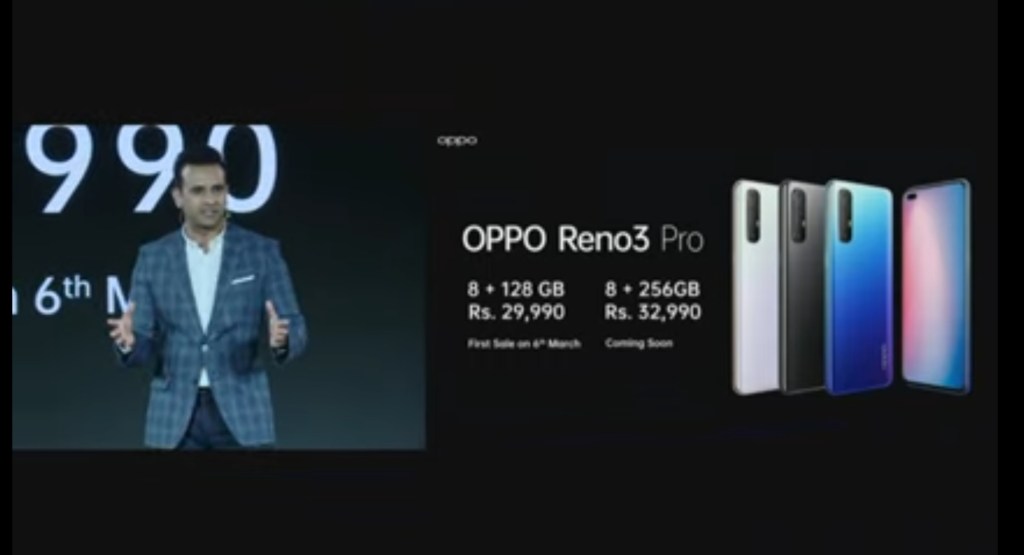
Oppo Reno 3 Pro is set to make its way to India on March 2, and the model launched in India will be quite different from the model launched in China last year. Called the global variant of the Oppo Reno 3 Pro, the company is detailing information about the smartphone in bits and pieces. Its dedicated promotional page for the upcoming phone has been updated to reveal camera specifications and features. Even new colour options have been teased in fresh promotional material on the page. The Oppo Reno 3 Pro is teased to sport a dual selfie hole-punch display with a 44-megapixel main selfie camera on board. The phone also has a quad rear camera setup at the back.
The promotional page for the Oppo Reno 3 Pro in India now has more details of the phone ahead of launch. The second selfie camera is listed to sport a 2-megapixel depth of field sensor alongside the 44-megapixel ultra-clear sensor. Front camera features will include ‘Dual Lens Bokeh ‘ that claims to achieve binocular bokeh effect with sharper edges and background gradients. The Oppo Reno 3 Pro is also listed to offer ‘Ultra Night Selfie Mode’ that essentially takes multiple shots to create an ideal image.
The quad camera setup at the back is listed to sport a 64-megapixel main camera, a 13-megapixel telephoto lens, an 8-megapixel ultra-wide-angle camera, and a 2-megapixel monochrome lens. The Oppo Reno 3 is also listed to come to India in Aurora Blue, Midnight Black, and Sky White colour options at launch. Other specifications are not known at the moment, but the renders shared on the page suggest volume buttons on the left edge, and the power button on the right. There is no rear fingerprint sensor in sight, hinting at an in-display sensor.
Apart from this, the company has also confirmed that the Oppo Reno 3 Pro is backed by a 4,025 mAh battery which comes with 30W VOOC fast charging support. Oppo claims that the new VOOC Flash charge 4.0 provides consumers to charge 50% of the battery in flat 20 minutes for an uninterrupted entertainment experience.
The Oppo Reno 3 Pro is said to come in three colour options — Auroral Blue, Midnight Black, and Sky White.
The company has also said that the customers can avail 10% cashback on the purchase of Oppo Reno 3 Pro. The cashback is applicable on HDFC bank debit and credit card, ICICI Bank debit and credit card, RBL Bank and Yes Bank credit card.
You also get one FREE (Green) Oppo Bluetooth speaker.
The customers can now pre-book the smartphone in Flipkart, Amazon and authorised offline stores in the country.
To recall, the Oppo Reno 3 5G phone was launched in China last December, and the phone was introduced with a single hole-punch display. The Indian or global variant, on the other hand, will be 4G-only and it is confirmed to sport a dual selfie hole-punch camera setup. The main rear camera setup has also been bumped to 64-megapixel, whereas the China variant has a 48-megapixel main sensor.
According to a tweet shared by OnePlus UK, this is not a smartphone or even a commercial product and the company may be gearing up to reveal another concept project to the world.
Updated News – 4:00 pm: A 5G-connected, snowball firing robot called Snowbot has been launched.
We've created 5G-connected, snowball-firing robots (they fire at 120+ mph; we're not messing around).
We're calling them Snowbots. And you can control them from your phone to shoot Snowbots controlled by other OnePlus fans, from March 9. Get ready. #OnePlus5GSnowbots
Earlier: Chinese smartphone maker OnePlus has posted a short video clip on Twitter to tease a new device that will be revealed on March 3.
According to a tweet shared by OnePlus UK, this is not a smartphone or even a commercial product and the company may be gearing up to reveal another concept project to the world.
“We are working on a special project (not a phone/commercial product!) and we’d love your thoughts on it. Reply to this tweet with if you are happy to give feedback, and we will DM a small number of you some photos,” the tweet reads.
Additionally, OnePlus is also expected to launch the OnePlus 8 and the OnePlus 8 Pro in the coming months.
Putting together all the rumours and speculations of the upcoming OnePlus 8 series, the likely specs sheet could include an obvious Qualcomm Snapdragon 865 chip and Android 10 bits.
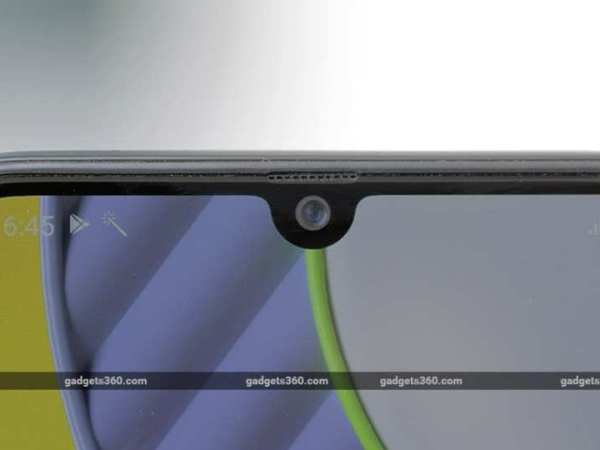
Recently, a OnePlus 8 Pro prototype has been spotted in the wild hinting at dual punch-hole display and a curved display like the OnePlus 7 Pro.
The back panel of the device shows off the quad-camera setup with three lenses along with an LED flash arranged in a vertical strip and a fourth camera placed alongside it.
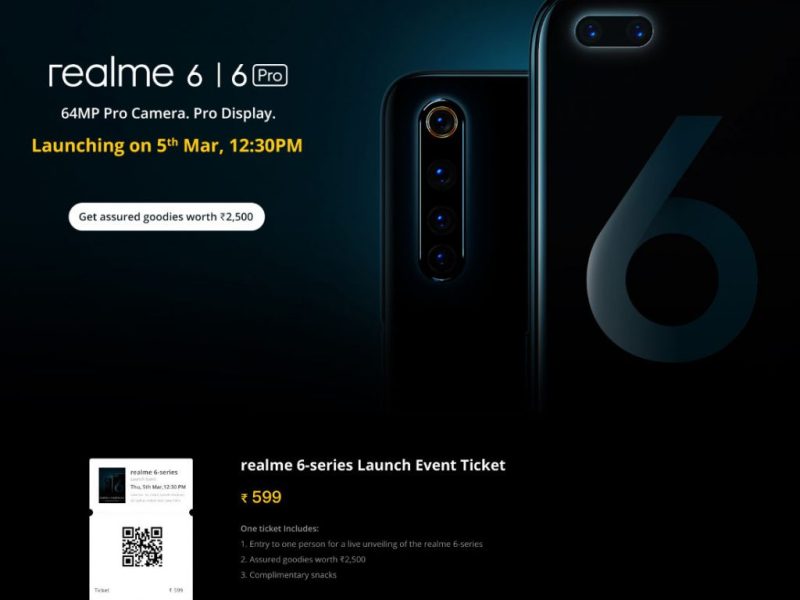
Realme will be launching the Realme 6 and the Realme 6 Pro on March 5 at an event in New Delhi.
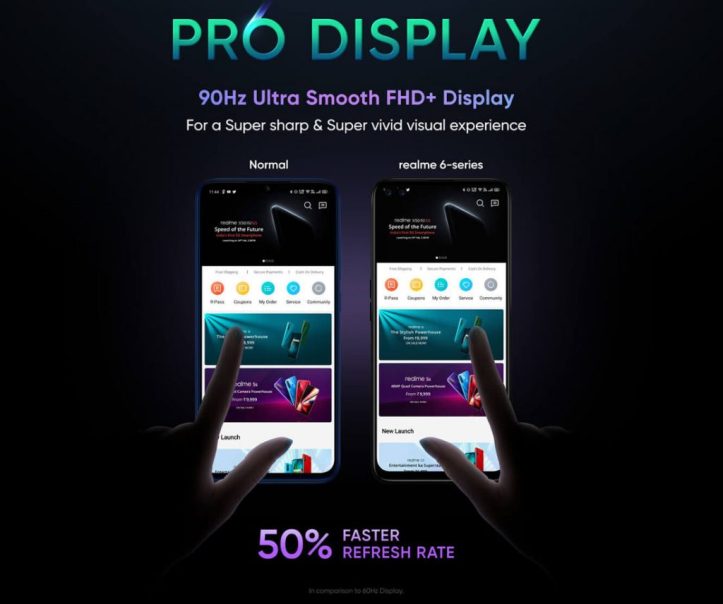
Realme announced a few days back that it will be launching the new Realme 6 series in India on March 5. Days ahead of the launch, alleged pricing of the Realme 6 and the Realme 6 Pro have leaked. It is expected that the new Realme 6 Series will be coming on Flipkart introduced at a starting price of Rs 9,999. With that, the company has teased some of the expected features including a quad-camera setup, punch-hole displays with 90Hz refresh rate.
Unconfirmed sources claim that the Realme 6 will be priced at Rs 9,999 while the Realme 6 Pro could launch at Rs 13,999. Now this is similar to the Realme 5 series that was launched last year, so do take this with a grain of salt.
As per the previous rumours and teasers, the Realme 6 Pro is expected to feature a 90Hz FHD+ screen and it may come with 30W flash charge tech. Also rumoured are quad camera setup that includes 64MP rear sensors. The device is said to be powered by Qualcomm Snapdragon 720G SoC. As for Realme 6, the smartphone is also expected feature a 90Hz screen with multi-cam support at the back.
Realme has also announced a blind order sale along with offers for the Realme 6 and Realme 6 Pro. By paying Rs 1,000 before March 4, customers can pre-book the device and pay the remaining amount before the first sale which is scheduled for March 15. If you pro-book the Realme 6, customers can get the Realme Buds 2 earphones. Realme 6 Pro buyers get a discount coupon of Rs 1,000 for the Realme Buds Wireless earphones.
Dre Twenti paid £1,200 for a MacBook Pro and three iPhone 11s, but ended up with lemonade.
Highlights
A UK student was conned into paying £1,200 for 2 bottles of lemonade.
He actually thought he was getting a Macbook Pro and three iPhones.
The trickster even had receipts showing “proof” of purchase, before switching the bags at the last second.
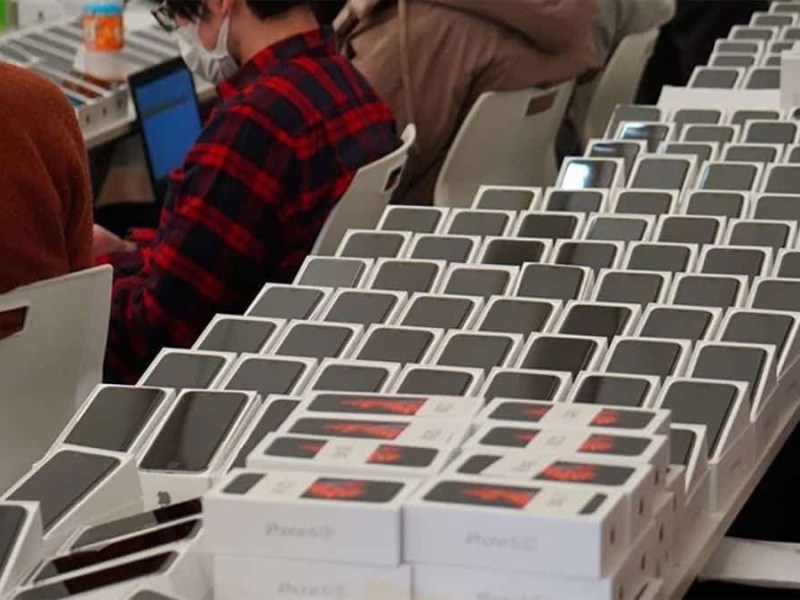
A UK student who thought he was buying a MacBook Pro and three iPhones was actually tricked into spending £1,200 i.e approx. $1500 on two bottles of lemondae.
According to Express and Star: Dre Twenti, from Tipton in the Midlands, says he and his girlfriend were approached by a stranger in the street, who asked him if he’d like to buy a laptop.
He says:
“I was asked if I’d like to buy a laptop which I thought was dodgy but still went and had a peek, it was a Apple Mac Pro.
“He also had few other items so I asked to take a look – three iPhone 11s.
“He showed me all the receipts which were brought from Liverpool Apple store, now I just had to withdraw the money.
Twenti paid about £700 cash and made up the rest in purchases from a local sports outlet. He continues:
“Got back to his car and we were greeted by an accomplice. He told me to check the items again which I did.
“So I proceeded to count the money as he passed the bag to my partner supposedly carrying the items.
When he got home, Twenti opened his back to find two bottles of lemonade and some cardboard. Devastated, he took to Facebook to share how he had been scammed:
I’ll honestly put my hands up and say it was a lesson learnt but an expensive one, they must of switched bags.
“This was done professionally. He seemed genuine. So don’t be fooled. Because I was. But that will only ever happen to me once.”
So there you have it. If you’re in the hunt for a new device from Apple, probably best not to buy it from a stranger in the street. And remember, if it sounds too good to be true, it probably is.
Antutu releases the list of the global Top 10 best performing Android phones for January based on the data collected from Antutu database.
It has been over a month since the beginning of 2020. Time passes more quickly than we have imaged. Athough some new 5G smartphones have been released during the past month, there are not so many sales of the new phones and the benchmark data of them are insufficient. Therefore, the first list of the global top 10 best performing Android phones are still dominated by 4G flagship processors, and there are no major changes in the ranking of this month.
Who was be the king of performance most recently? Let’s take a look at the rankings below.
As usual, we have included separate lists for flagship phones and mid-range phones. The rankings of the smartphones are more likely to depend on the SoCs powering them.
The data are collected between January 1, 2020 to January 31, 2020. The list consists of Android devices that have at least 1,000 units running Antutu benchmark V8, and the scores are averaged across all devices, making the results more representative.
1. Flagship Phones
In January, the powerful gaming phone Asus ROG Phone 2 with 12GB of RAM and 512GB of storage topped the list once again with an average Antutu score of 507,051 points. This is the fourth consecutive month for the phone to occupy the top position on the list. As the phone is released in September 2019, that means it has been ranking the first on the list since its release. That makes the powerful performance of the phone more impressive.
Coming second is One Plus 7T 8GB+256GB variant, which achieves an average Antutu score of 493,154 points. This is also the fouth consecutive month for a OnePlus device to occupy the second position on the list with very small changes in score. realme X2 Pro claimed one position to reach third place with an average Antutu score of 483,651 points, 10967 points higher than the fourth ranked OnePlus 7 Pro, which is a relatively large score gap.
The fifth position also goes to OnePlus, namely the OnePlus 7 8GB+256GB variant, with an average Antutu score of 467,834 points, which is also pretty good performance with only 4850-point score gap compared to OnePlus 7 Pro.
Making up the rest of this month’s Top 10 flagship phone list are, in order, Samsung Note10+ (SDM855) 12GB+256GB variant (avg. sore: 467,180), Redmi K20 Pro Premium Edition 12GB+512GB variant (avg. sore: 462,955), Samsung Note10+ (9825) 12GB+256GB variant (avg. sore: 454,500), Samsung Note10 (9825) 8GB+256GB variant (avg. sore: 449,922) and Mi 9 6GB+128GB variant (avg. sore: 447,988).
Above is the top 10 flagship phone list for January 2020. In general, there are no big changes in the ranking of this month compared to last month. With a series of new smartphones powered by Snpadragon 865 coming to the market soon, we expect there will be some changes in the ranking list of next month. Let’s stay tuned.
2. Mid-range Phones
The first place for mid-range phones is occupied by Redmi Note 8 Pro 6GB+128GB variant once again, which achieves an average Antutu score of 290,239 points. It is not the first time for the phone to appear on the top position of the mid-range phone list. Although Samsung and Qualcomm have already released their new mid-range SoCs and the smartphones powered by these SoCs are already available on the market, there are yet few scores of the new phones that can be found in Antutu database which may be due to insufficient sales, and therefore no new phones can be found on the mid-range phone list of this month.
Coming second is Mi Note 10 6GB+128GB variant, which achieves an average Antutu score of 264,898 points. The biggest selling point of the phone is that it is the first smartphone in the world to ship with a 100 million-pixel camera. It comes with Snapdragon 730G SoC. Although it is top performer in terms of camera, the performance ranking depends largely on the processor, therefore it can only rank second on the list.
The third place is also occupied by smartphone from Xiaomi -the Mi 9T 6GB+128GB variant which scored 260,382 points. The Chinese smartphone maker Xiaomi swept the top three positions of the list this time.
Other devices that have made it to the list of the Top 10 best performing mid-range phones are, in order, Samsung A80 8GB+128GB variant (avg. score: 250884), realme XT 8GB+128GB variant (avg. score: 224,011), Mi 9 SE 6GB+ 64GB variant (avg. score: 223,441), realme Q 8GB+128GB variant (avg. score: 222,718), Mi 9 Lite 6GB+128GB variant (avg. score: 215,624), Redmi Note 7 Pro 6GB+128GB variant (avg. score: 215,060) and Vsmart Live 6GB+64GB variant (avg. score: 214421).
As the first performance ranking list in 2020, smartphones on the list are still the familiar ones in 2019 and there is nothing new. However, with smartphones powered by the new 5G SoC going on sale, we can expect some changes in the ranking list of next month. Hopefully, SoCs like Snapdragon 865/765G/765, MediaTek Dimensity 1000/1000L/800 and Samsung Exynos 980 will add vitality to the list and are expected to occupy the top positions of the list for a long time.
This page puts together the Basemark benchmark scores for all the devices tested so far.
While acknowledging that there are many other excellent benchmarking tools out there, we’ve settled on using Basemark due to the tool’s wide platform support.
Basemark OS II is a compound, all-in -one benchmarking tool for measuring the overall performance of smartphones and tablets on Android, iOS and Windows phone 8.
Similarly, Basemark X is a cross-platform benchmarking tool, which is meant for evaluation and comparison of gaming and graphics performance for the same groups of mobile devices.
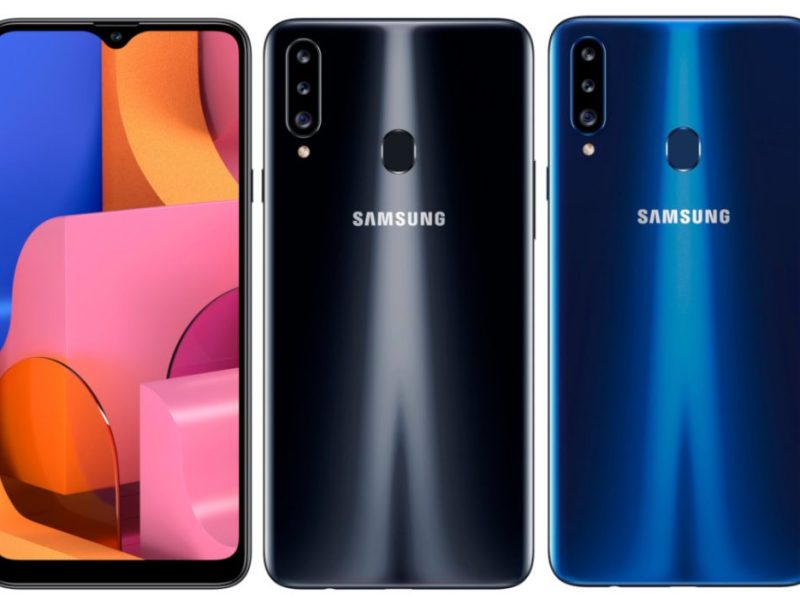
The Samsung Galaxy M series has gained a lot of popularity thanks to affordable prices and up-to-date hardware.
Samsung has managed to lower prices by selling these models online, reducing distribution costs. The sub-Rs. 15,000 Samsung Galaxy M30 set the pace, and a refreshed version, the Galaxy M30s, really helped the company strengthen its position in this segment. Samsung has now launched a successor to the Galaxy M30s, called the Galaxy M31. You now get a quad-camera setup, an upgrade from the triple camera setup on the M30s. However, the processor and the battery capacity remain unchanged. Will this be enough to keep the Galaxy M series competitive in the market? We review the Galaxy M31 to find out.
Samsung Galaxy M31 design
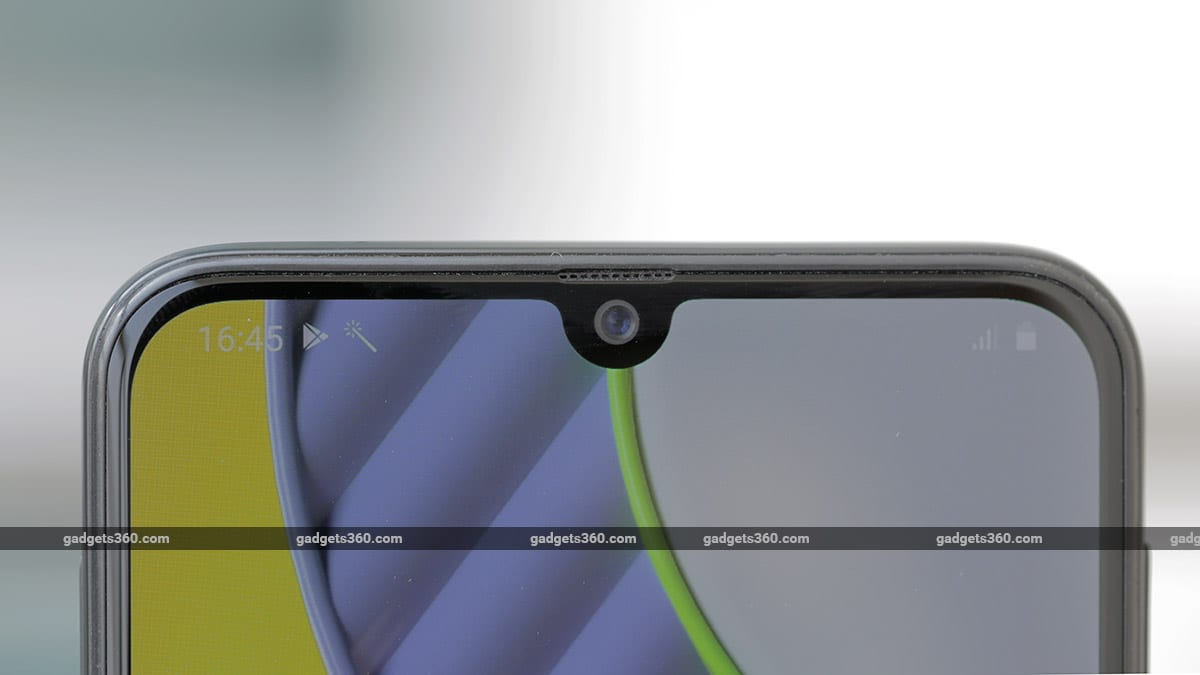
At first glance, it is hard to distinguish between the Samsung Galaxy M30s (Review) and the Galaxy M31 from the front. Both smartphones sport big 6.4-inch displays with waterdrop notches, which Samsung calls Infinity U displays, The bezels aren’t thin, but are acceptable for the price. Just like with other M series smartphones, Samsung has used plastic in the construction of the Galaxy M31. The earpiece is sleek and sits right above the display in the frame of the smartphone.
Pick the Galaxy M31 up and it feels comfortable to hold in the hand. The sides are slightly curved which helps with grip. Samsung has positioned the power and volume buttons on the right of the device. The power button is easy to reach but the volume buttons could have been positioned better. On the left is the SIM tray which did not sit perfectly flush on our review unit. The Galaxy M31 has a 3.5mm headphone jack, primary microphone, USB Type-C port, and speaker at the bottom. The top only has the secondary microphone.
When you look at the back of the Galaxy M31, you’ll see some changes. The camera module is similar to that of the Galaxy M30s but it now packs a fourth camera. Next to this is the fingerprint scanner which was comfortable for us to reach while holding the smartphone.
The Galaxy M31 sports a 6.4-inch AMOLED display.
The Galaxy M31 packs in a big 6,000mAh battery and weighs 191g makes the device feel a little heavy. Samsung has thankfully bundled a 15W charger in the box which should help keep charging times down. The company offers the Galaxy M31 in two colours, Ocean Blue and Space Black. We had the Space Black variant for review, and it picked up fingerprints and smudges very easily. There is no case in the box, so you may want to buy one.
Samsung Galaxy M31 specifications and features
The spec sheet of the Galaxy M31 looks similar to that of the Galaxy M30s. It sports a 6.4-inch AMOLED display with full-HD+ resolution. It also has Corning Gorilla Glass 3 for protection which should keep it from picking up scratches too easily. The display has good viewing angles and is legible when outdoors. There are two colour profiles to choose from, and you can also change the white balance.
Samsung has retained the Exynos 9611 SoC from the Galaxy M30s. This is an octa-core processor with four performance ARM Cortex-A73 cores clocked at 2.3GHz and four efficiency Cortex-A53 cores clocked at 1.7GHz. For graphics, it has the Mali-G72 GPU. You get 6GB of RAM and a choice between between a 64GB storage variant and a 128GB storage variant for Rs. 15,999 or Rs. 16,999 respectively. However, Samsung is offering a Rs. 1,000 discount which brings the prices down to Rs. 14,999 and Rs. 15,999 respectively. The duration of this offer has not been specified.
The Galaxy M31 sports dual Nano-SIM slots and a microSD card slot
The Galaxy M31 has two Nano-SIM slots and has support for 4G as well as VoLTE. It also supports Wi-Fi, Bluetooth, and GPS. Storage is expandable by up to 512GB.
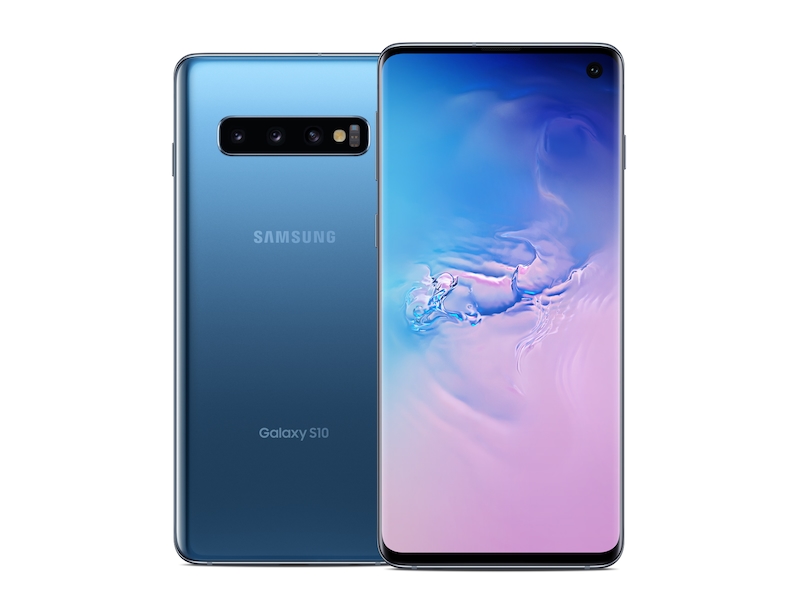
On the software front, Samsung ships the new Galaxy M31 with OneUI 2.0 on top of Android 10. The software is similar to what we have seen on the recently launched Galaxy S10 Lite and Galaxy Note 10 Lite We did find a fair amount of bloatware on Galaxy M31. Apart from the Google apps, Netflix, Facebook, Candy Crush Saga, and Samsung Max were preloaded on the smartphone. Samsung also has its own apps such as My Galaxy and Samsung Shop. We found My Galaxy to be a tad annoying as it kept pushing notifications through the day.
You need to be careful of what you allow while setting up the device, or Samsung will also send you marketing information. The setup process suggests that you download several other apps which we suggest you skip.
The Galaxy M31 does get Android 10 goodies such as Dark Mode and Focus Mode, which can be enabled very easily through the notification shade. Dolby Atmos is available but it only works with earphones. Digital Wellbeing and Parental Controls are also present on the device. Traditional gestures like double-tap to wake, gesture screenshot are present on the Galaxy M31 as well. You also get the option to ditch the three-button navigation layout in favour of full-screen gestures.
Samsung Galaxy M31 performance and battery life
Samsung has bumped up RAM on the Galaxy M31 compared to its predecessor which should give it some leverage while multitasking. We did not notice any lag or stutter while using the smartphone. The device is fairly quick to load up apps however big apps do take slightly longer. Since there is plenty of RAM, multitasking is a breeze and we did not find ourselves waiting for an app to load all over again.
The fingerprint scanner is quick to unlock the smartphone, and the selfie camera does a decent job with face recognition. We enjoyed watching content on the AMOLED display. There is Widevine L1 support which should let you stream full-HD content.
We ran our usual benchmarks on the Galaxy M31. In AnTuTu, it managed to score 191,981 points which is higher than the Galaxy M30s did. The Galaxy M31 also scored 348 and 1,247 respectively in Geekbench’s single-core and multi-core tests. As for graphics benchmarks, the Galaxy M31 managed 41fps in GFXBench T-Rex, and 8.9fps in GFXBench Car Chase.
The Galaxy M31 packs a 6,000mAh battery
We played PUBG Mobile on the Galaxy M31, and the game defaulted to high settings by default with the graphics set to HD and the frame rate to High. The game was playable at these settings and we did not notice any issues. After playing for 20 minutes we noticed a four percent battery drop, and the device did get warm to the touch. The big battery will allow you to play for quite long without needing to plug the smartphone into the charger. In our HD video loop test, it lasted for 22 hours, 31 minutes.
With our usage, the battery lasted us for close to two days without any issues. If battery life is important to you, the Galaxy M31 will not disappoint.
Samsung Galaxy M31 cameras
The Galaxy M31 sports a quad-camera setup at the back and a single 32-megapixel selfie shooter. The primary camera on the Galaxy M31 has a 64-megapixel resolution and f/1.8 aperture. This camera takes 16-megapixel binned shots by default but you can switch to the full resolution. There’s also an 8-megapixel ultra-wide-angle camera with a 123-degree field of view and an f/2.2 aperture. The other two are a 5-megapixel depth sensor and a 5-megapixel macro camera. Samsung’s camera app is the same as before and we could find our way around it very easily. There’s a toggle to switch between the primary and the wide-angle cameras. The Scene Optimiser is quick to detect scenes and set the camera up accordingly.
The Galaxy M31 has a rear quad-camera setup
We found the Galaxy M31 to be quick to detect what it’s pointed towards and lock focus in daylight. Photos turned out well and had decent details. Text at a distance was legible on zooming in. The smartphone enables HDR automatically if required. Switching to the wide-angle-camera is easy and you can get a wider field of view. However, while these shots look great as is, zooming in reveals that this sensor misses out on details. Wide-angle shots also have barrel distortion at the edges.
Samsung Galaxy M31 daylight sample (tap to see full-size image)
The Galaxy M31 is capable of separating subjects and backgrounds when shooting close-ups, giving a natural depth effect. However, we felt that bright colours were reproduced too aggressively, resulting in a loss of detail. The macro camera takes decent shots outdoors but the quality dips when indoors. The output is restricted to 5 megapixels in resolution.
Portrait shots were good and the camera app does give you the option to set the level of blur before taking a shot. Edge detection is very good and the Galaxy M31 does a good job of separating the subject from the background.
In low-light the Galaxy M31 takes longer to lock focus, so you will need to be patient while taking shots. Photos taken in low-light looked good as in but you can notice fine grain in the output on zooming in. Switching to Night mode helps reduce grain in the output.
Samsung Galaxy M31 low-light sample
Samsung Galaxy M31 night mode sample Selfies taken with the Galaxy M31 were decent when shot with adequate lighting around, but in low light, the quality goes down a notch and results are grainy.
Video recording maxes out at 4K for the primary rear camera and 1080p for the selfie shooter. The Galaxy M31 meters light properly when shooting during the day, however, we found that the footage wasn’t well stabilised. There is a Super Steady mode that uses the wide-angle-camera and crops the frame to minimise shakes. We got well-stabilised output using this mode, but the video lacked detail. There’s no stabilisation at 4K.
Verdict
Samsung has seen success with the Galaxy M30s, so it didn’t want to fix what isn’t broken. What the company has done is upgraded the RAM, put in a fourth rear camera, and preloaded Android 10. The Galaxy M31 does not feel like a completely new device, but more like an update to the Galaxy M30s.
The Exynos 9611 is capable but we wouldn’t have complained if this phone had a more powerful processor to fend off the competition. The upgrades make this phone slightly better and more versatile, but it isn’t a significant step up.
Battery life is still the main highlight, and we could easily go on for two days without needing to be plugged in, something the competition at this price level cannot do very easily. The Redmi Note 8 Pro and the Realme X2 will still offer you more bang for your buck overall, but if you don’t care for benchmark scores and just want a device that covers the basics and has a great battery, the Galaxy M31 will do just fine.
After the MWC got cancelled, the company today confirmed that it will introduce the Find X2 series at a global launch event on March 6th
Update: OPPO has confirmed that the phone will feature 6.78-inch (3168 x 1440 pixels) 3K OLED 513PPI screen with 120Hz refresh rate and 240Hz touch sampling rate. OPPO is also expected to introduce its first smartwatch alongside.
Earlier: OPPO at the Qualcomm tech summit confirmed that it will introduce its next flagship smartphone powered by Snapdragon 865 Mobile Platform in Q1 2020. OPPO VP Brian Shen has confirmed punch-hole camera on the top left.
When we use punch hole camera solutions for smartphone displays we select the top left area for a reason. 🤔 The left hand covers the camera leaving a full screen image when gaming. Full screen innovation for users comes in many forms. 🤓
Details about the phone’s screen surfaced recently revealing a 6.5-inch Samsung OLED curved display with (3168×1440 pixels) QHD+ resolution, becoming OPPO’s highest quality screen till date. For refresh rate, it is said to feature a 120Hz refresh rate. Charging will also be one of its fastest with a 65W wired charger, same as Reno Ace. Rumors say that it will pack a 4065mAh battery.
In the camera department, the OPPO Find X2 will feature a punch-hole front camera. For the rear camera, OPPO will use Sony’s new 48MP IMX689 sensor with the all Pixel Omni-directional PDAF technology, which will improve the focusing speed.
Xiaomi’s Redmi brand has started teasing the launch of Redmi K30 Pro, the company’s flagship smartphone ahead of announcement in March.
The company has confirmed no-notch screen with pop-up camera, similar to the Redmi K20. It has also confirmed that the phone will be powered by Snapdragon 865 and will support 5G. It should run Android 10 with MIUI 11.
Other specifications are not known yet, but it is expected to feature FHD+ AMOLED screen with 90Hz refresh rate, in-display fingerprint scanner, LPDDR5 RAM, 40W fast charging, retain the 3.5 headphone jack, and a slightly bigger 4700mAh battery compared to the predecessor.





































![OnePlus expected to unveil a new concept device on March 3 [Updated]](https://geekspot.tech.blog/wp-content/uploads/2020/03/3abfb-pzd11ryn.jpeg?w=800&h=600&crop=1)
















 Basemark
 Basemark
![Realme band with AMOLED screen launching in India on March 5 [Updated: New Colors, Cricket Mode, IP68 Rating]](https://geekspot.tech.blog/wp-content/uploads/2020/03/1bcab-realme-band-1024x629-1.jpg?w=800&h=600&crop=1)




















 GeekSpot