OnePlus 8 Pro is expected to come with 120Hz Fluid Display at QHD+ resolution
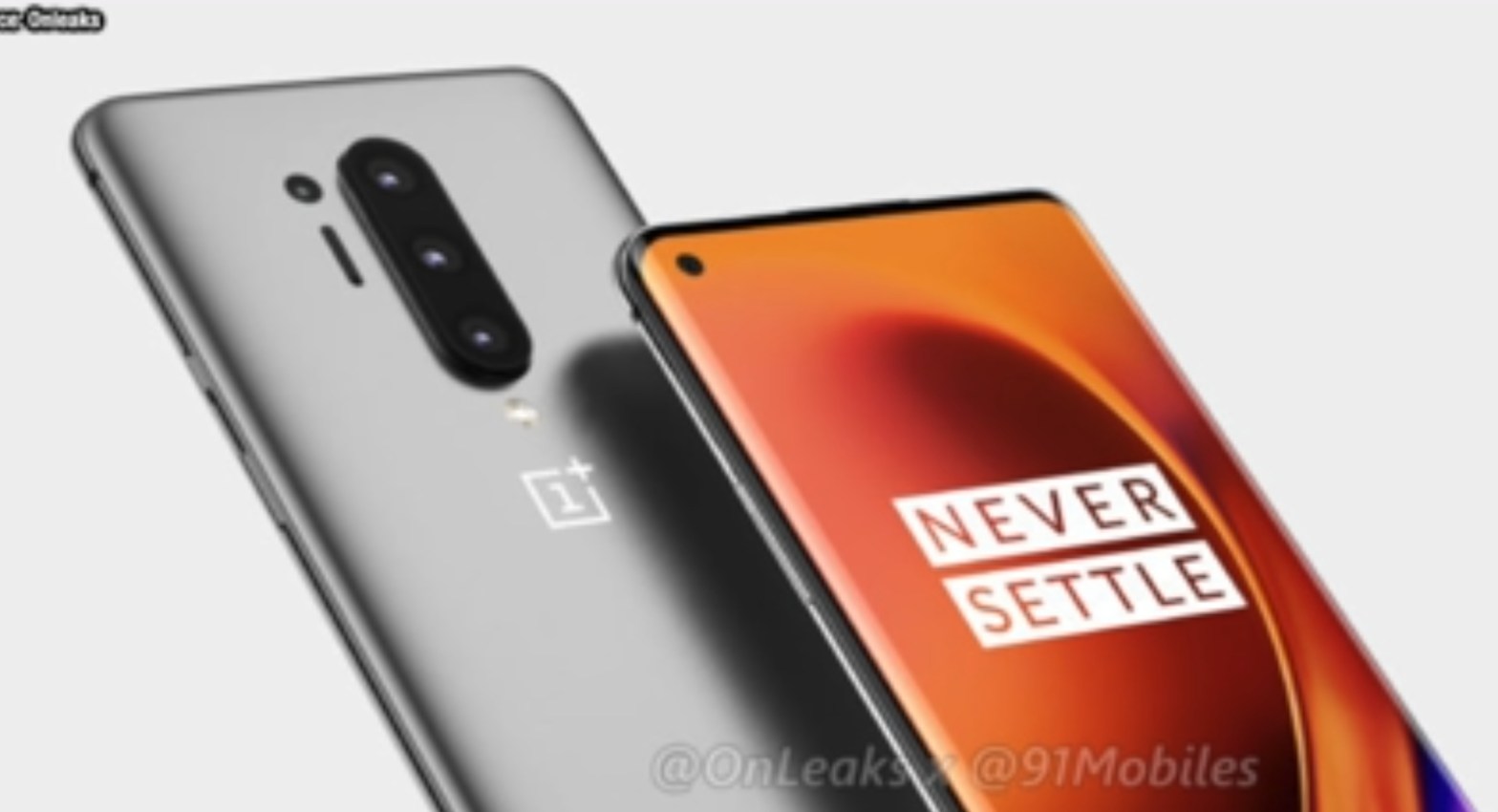
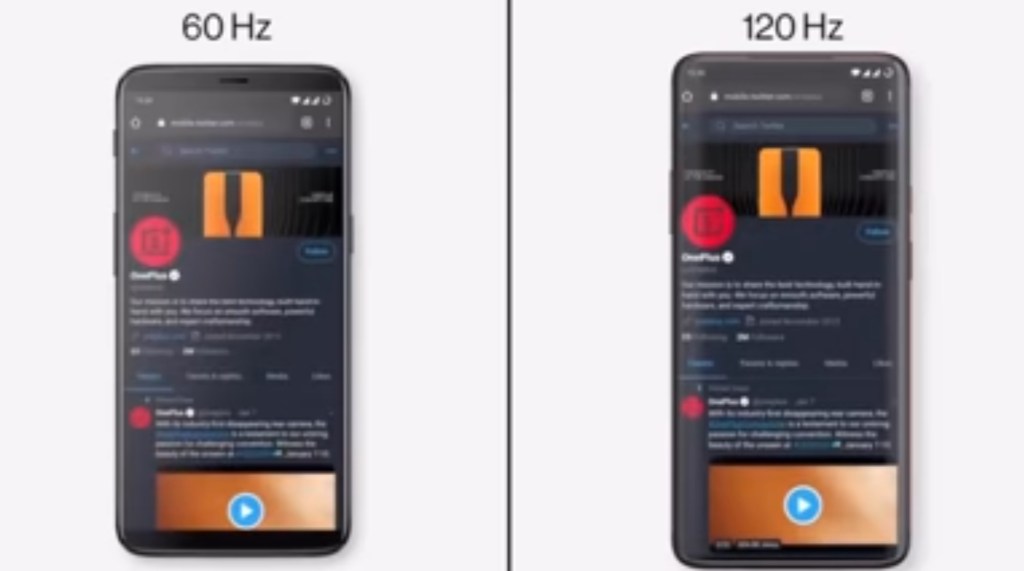
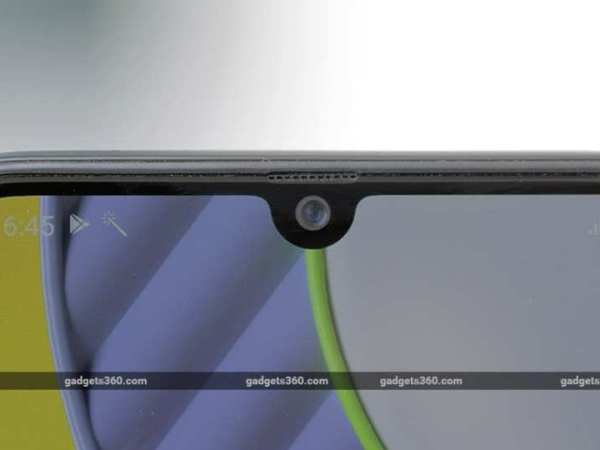
OnePlus 8-series could be launched in Q2 2020, and the high-end variant is said to rock the newly announced Quad HD+ 120Hz panel. Now, an alleged new leaked hands-on image of the OnePlus 8 Pro by a OnePlus insider reveals the screen refresh rate options in the Settings menu. Users will have the choice of switching between 60Hz, 90Hz and 120Hz refresh rates. A report from True Tech claims that the hands-on image could belong to a pre-production unit. Furthermore, OnePlus 8 Pro image show a punch-hole display and slim bezels, as seen in past renders. The volume rocker is on the left edge, while the alert slider and power button are on the right
OnePlus 8 Pro could have Quad HD+ resolution, while the regular OnePlus 8 and OnePlus 8 Lite are likely to max out at FHD+. Switching the screen mode to 120Hz will offer a smooth scrolling experience, but it will drain the phone’s battery faster. The OnePlus 8 Pro and the standard OnePlus 8 are expected to be powered by the Snapdragon 865 SoC coupled with up to 12GB RAM and 256GB storage and have 5G connectivity.
On the other hand, the OnePlus 8 Lite will ship with MediaTek Dimensity 1000 SoC and will have 5G connectivity as well, but it could have either 60Hz or 90Hz refresh rate and a flat panel. As for the optics, the OnePlus 8 Pro could house a 32MP selfie snapper and quad cameras setup at the back consisting of a 64MP Sony IMX686 primary sensor, a 20-megapixel ultra-wide-angle lens, a 12-megapixel telephoto lens and a ToF sensor. Since we’re still months away for the launch, things might change at any point.
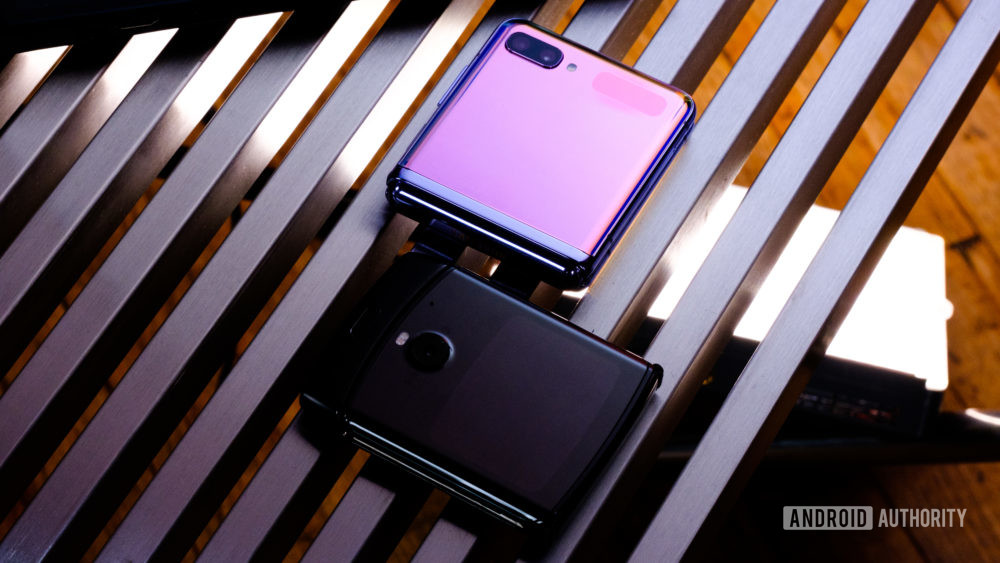
Samsung’s Galaxy Z Flip launched on February 14, and it’s already nearly impossible to find. This is partially due to the low amount of stock Samsung initially produced, and partially because, well, it’s arguably the best foldable phone on the market.
Meanwhile, the Motorola Razr was announced months ago, and it only officially went on sale on February 6 — just over a week before the Z Flip. The Razr has been met with so-so reviews, at once praising its nostalgic feel, while also criticizing its low-end specs sheet and questionable display quality. So when the Galaxy Z Flip was announced with unquestionably better specs and a more refined design at a lower price, most people hurried to deem the Razr dead on arrival.
But what exactly are the differences between these two foldable devices? Let’s get into it.
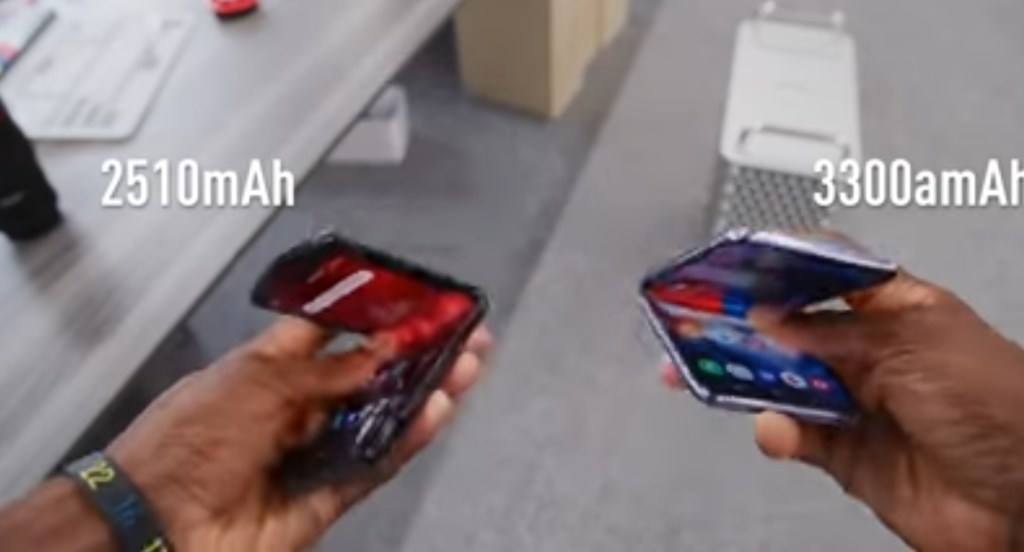
From a pure specs perspective, it’s clear the Galaxy Z Flip reigns supreme. The Z Flip employs a Qualcomm Snapdragon 855 Plus processor, compared to the much older and weaker Snapdragon 710 chipset in the Motorola Razr. Additionally, there are 8GB of RAM in the Z Flip, vs. 6GB of RAM in the Razr, and 256GB of storage vs. 128GB. The Z Flip also uses a much larger 3,300mAh battery, stunting the 2,510mAh cell in the Razr.
Main “Flex View” display: 6.2-inch foldable pOLED 2,142 x 876 resolution 21:9 aspect ratio
External “Quick View” display: 2.7-inch gOLED 600 x 800 resolution 4:3 aspect ratio
Battery
3,300mAh 15W Wired charging
2,510mAh 15W Wired charging
Storage
256GB
128GB
RAM
8GB
6GB
Cameras
Main: Dual-lens
Selfie: Single lens 10MP
Main camera: 16MP sensor, ƒ/1.7 aperture, 1.22μm, EIS, Dual Pixel autofocus, Laser autofocus, Color Correlated Temperature (CCT) dual LED flash Video: MPEG4, H.263, H.264, H.265, VP8, VP9
Front camera: 5MP sensor, ƒ/2.2 aperture, 1.12μm, screen flash
SoC
Qualcomm Snapdragon 855+
Qualcomm Snapdragon 710
Security
Side-mounted fingerprint sensor
Front-mounted fingerprint sensor
Software
Android 10
Android 9 Pie
Colors
Mirror Black, Mirror Purple
Mirror Gold (select countries)
Black, Gold
From a power perspective alone, it’s pretty clear who the winner is here. Motorola says its specs are lower because it took a really long time getting the design of the phone just right. It says there were 26 iterations of the hinge design, which minimizes the size of the waterdrop display that gets hidden in the hinge. Unfortunately, Motorola is also behind in the quality of its display technology.
The Motorola Razr uses the same plastic OLED display we’ve come to know from foldable devices, but the Galaxy Z Flip is using a new technology called ultra-thin glass. This means the display feels much more similar to a real smartphone display compared to the plastic OLED on the Razr. Interestingly though, a recent durability test by Zack Nelson of JerryRigEverything showed the device taking nearly the same amount of damage as a plastic OLED. Samsung said in a statement that the Z Fold’s display should be handled with care, but that doesn’t exactly inspire confidence in the device’s longevity.
The display on the Galaxy Z Flip is much sharper than the one on the Motorola Razr. The Z Flip’s display comes in at a resolution of 2636 x 1080, versus the 2142 x 876 display on the Razr. That means you can’t even watch FHD content at full resolution on the Razr, which is a big letdown.
One aspect Moto beats out the Z Flip is in the usefulness of its front display. Samsung’s Z Flip features a small 1.1-inch screen for checking the time and notifications, but Moto’s much larger 2.7-inch display shows much more information. You can also use both displays as camera viewfinders for selfies, but it’s much more enjoyable to use the Razr’s, which doesn’t crop nearly as much of the shot.
In terms of cameras, the Z Flip once again nudges out the Razr. There are two rear cameras on the Z Flip, one wide and one ultra-wide, and both are 12MP. On the inside, you’ll find a 10MP selfie camera, seated in a punch hole similar to what you’d find on the Samsung Galaxy Note 10 or Galaxy S20 series. The Razr, by contrast, uses a 16MP main sensor and 5MP internal sensor. While we haven’t been able to spend much time with the Razr ourselves, early reviews have noted that its camera performance isn’t exactly best-in-class.
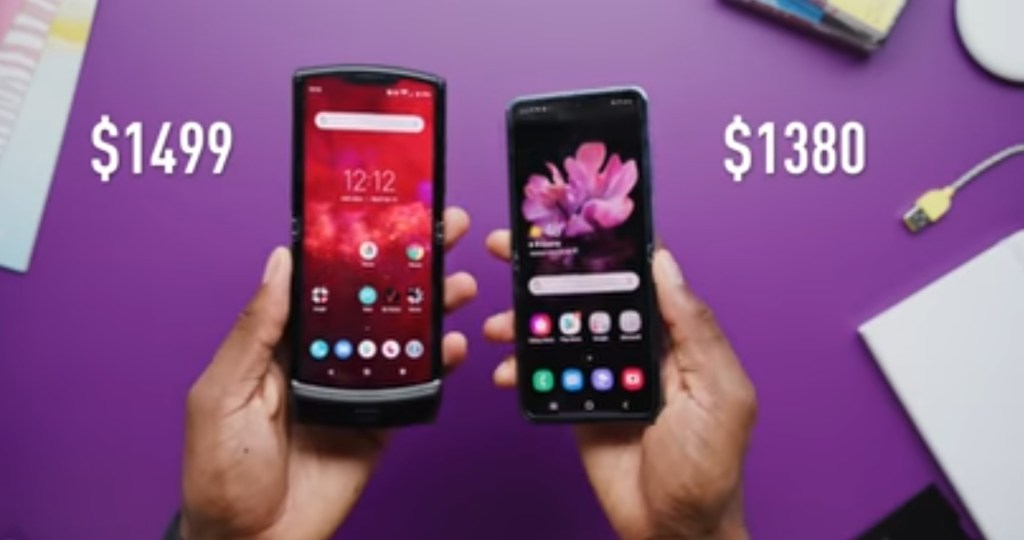
And finally, we come down to price. While the Motorola Razr costs a whopping $1,499, the Samsung Galaxy Z Flip comes in at $1,380. While there is no doubt both of these phones are extremely expensive, it’s almost impossible to recommend the Razr, especially when it is a Verizon exclusive device.
Samsung announced a new clamshell foldable phone at its Galaxy Unpacked 2020 event on February 11. While the device has been made available in the US, it was yet to be launched in India.
Samsung Galaxy Z Flip is priced at Rs 1,09,999 in India.
It is being offered in Mirror Black, Mirror Purple, Mirror Gold colour options.
Users can pre-order the phone via Samsung e-store and select offline retailers.
The company has finally begun taking pre-orders for the Galaxy Z Flip in the country. The foldable phone is priced at Rs 1,09,999 for the sole 8GB + 256GB model. It is being offered in Mirror Black, Mirror Purple, Mirror Gold colour options. Users can pre-order the phone via Samsung e-store and select offline retailers.
Samsung will start delivering the Galaxy Z Flip pre-orders from February 26. The company is packing a free cover and AKG headphones inside the box. The open sale is said to start on a later date.
Samsung Galaxy Z Flip features a foldable 6.7-inch full-HD (1080×2636 pixels) Dynamic AMOLED Infinity Flex display with 21.9:9 aspect ratio and 425ppi pixel density. It has a secondary 1.1-inch (112×300 pixels) Super AMOLED display with a 303ppi pixel density. The handset is powered by the Qualcomm Snapdragon 855+ SoC. It comes with 8GB RAM and 256GB of internal storage. However, there is no option to expand the storage further with a microSD card.
As for the optics, the Galaxy Z Flip sports a dual rear camera setup: a 12MP wide-angle sensor (f/1.8, 1.4-micron pixels, 78-degree FoV) + a 12MP ultra-wide-angle lens (f/2.2, 1.12-micron pixels, 123-degree FoV, OIS). On the front lies a 10MP selfie shooter. The handset packs a 3300mAh battery and has a single mono speaker.
The Galaxy Z Flip comes with a new Flex mode UI that lets the Galaxy Z Flip open at varied angles. The small screen also has a swipe-to-see notification feature for scanning through all important notifications without opening the phone. Moreover, Samsung has added small nylon fibres on the edges of the hinge to repel dust. The hinge is touted to open and close 200,000 times.
Chinese manufacturing giant, Xiaomi, recently released its latest flagship series, Xiaomi Mi 10 series.
However, there were arguments amongst netizens that the upcoming Redmi K30 Pro will have better specs. Xiaomi’s VP and general manager of the Redmi brand, Lu Weibing, cleared the air in this regard. He said that two flagships were released in February but there won’t be any more than the Mi 10 Pro. A netizen specifically asked, “Redmi K30 Pro surpasses the Xiaomi 10 Pro?”. Lu Weibing replied, “No, don’t think about it”.
One of the biggest highlights of Xiaomi Mi 10 Pro is the camera. It has a 108MP main camera with a 20MP super-wide-angle, 8MP telephoto, and 12MP portrait sensors. The main camera and telephoto lens support OIS (Optical Image Stabilization) and 8K video recording. On DxOMark ranking, Xiaomi Mi 10 Pro score hit 124 points making it the top-performing device.
108MP rear camera with 1/ 1.33″ Samsung sensor, 0.8μm pixel size, f/1.69 aperture, OIS, 8P lens LED flash, 12MP 1/2.6-inch 2PD sensor with 1.4um for 2x zoom and portrait, 8MP telephoto lens for 10x hybrid zoom and 50x digital zoom, 5x optical zoom, OIS, 20MP 117° (13MP 123° in Mi 10) ultra-wide angle lens, 8k at 30fps, 4k 60fps, 960fps at 720p.
Redmi K30 Pro has reportedly passed through 3C certification in China. It has two model numbers – M2001J11E and M2001J11C.
The Redmi K30 Pro could reportedly come with a 4700mAh battery.
The 3C listing reveals that the phone will support 33W fast charging.
The Redmi K30 is available in China in 4G and 5G variants.
While the listing doesn’t reveal much information about the phone, Chinese media ITHome claims that this is the upcoming Redmi K30 Pro 5G. The 3C listing reveals that the phone will support 33W fast charging.
The Redmi K30 became the talk of the town when Redmi General Manager Lu Weibing made the official announcement on Weibo in late August last year. Since then, we’ve been learning more and more about the handset’s more powerful ‘Pro’ version, which is expected to hit the market soon. The Redmi K30 was officially launched in China in late 2019 and came to India earlier this week in the form of the Poco X2. Now though, we’re learning from a recent Gizmochina report that the Redmi K30 Pro could feature a large 4700mAh battery that has support for 33W fast charging.
According to the report, a pre-production unit of the Redmi K30 Pro was spotted featuring a 4700mAh battery by online tipster Digital chat station. The handset is expected to be bundled with a Xiaomi charger that, according to the 3C regulatory body in China, bears the model numbers MDY-11-EF and MDY-11-EX. The charger is rated at 33W for fast charging. For reference, the Redmi K30 has a 4500mAh battery. Since this information hasn’t come directly from Redmi, we suggest you take it with a pinch of salt till the Redmi K30 Pro officially hits the market.
The outgoing Redmi K20 Pro and Redmi K20, by contrast, ship with a smaller 4000mAh battery. Though the bundled charger is an 18W unit, they have support for a 27W fast charger. The Redmi K20 Pro is similar to its ‘non-Pro’ sister in almost every except the processor. While the Redmi K20 Pro sports a flagship-grade Qualcomm Snapdragon 855 chip, the Redmi K20 makes do with a Qualcomm Snapdragon 730 chip. If the upcoming Redmi K30 Pro indeed sports a larger battery than the Redmi K30, then it’s possible its camera setup, too, is more sophisticated.
Since the battery capacity doesn’t appear to be increasing by much, there’s a good chance the Redmi K30 Pro isn’t a larger device in the user’s hands. The screen on the Redmi K30 Pro is expected to be the same 6.67-inch IPS LCD unit that currently does duty on the Redmi K30. The screen’s resolution, too, should be the same 1080 x 2400 pixels. When it becomes available, the Redmi K30 Pro is expected to run the company’s proprietary MIUI 11 software that’s based on Android 10. We expect to learn more about the Redmi K30 Pro in the coming weeks.
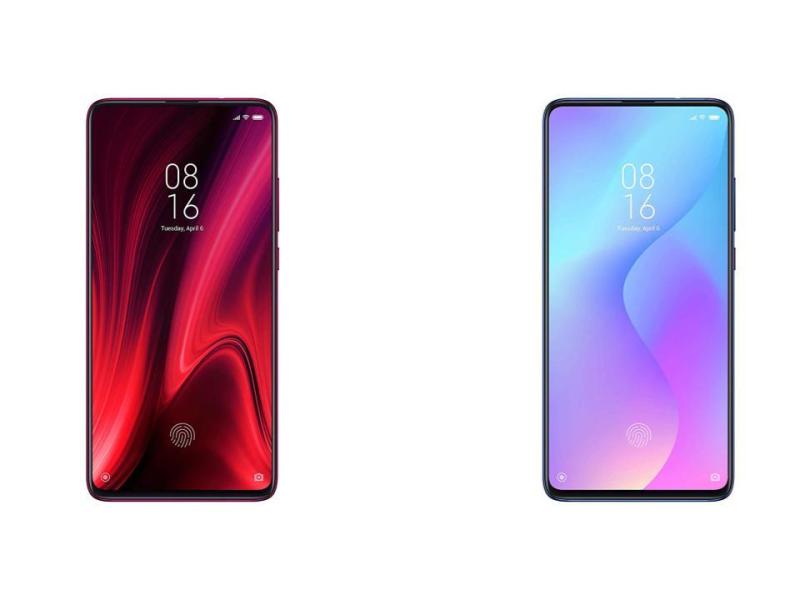
Note: Cover image represents outgoing Redmi K20/Redmi K20 Pro series
Chinese handset maker OnePlus, last year for the first time, launched two smartphones at the same time with OnePlus 7 and OnePlus 7 Pro and it seems that this year the company is going to take it up a notch
A couple of leaks in the past have suggested that we may also see a third handset. If the leaks are to be believed, the three handsets that we may see from the company this year will be called OnePlus 8, OnePlus 8 Pro and OnePlus 8 Lite.
As of now, there is no launch date on the horizon but a UK-based e-commerce website called Giztop has listed these three handsets on its website — revealing specs as well as price. All three phones are right now listed as ‘out-of-stock
OnePlus 8 Lite: Price and specs
As per the listing, the OnePlus 8 Lite is priced at $499 (approximately Rs 35,600). In terms of specs, the handset is said to offer a 6.4-inch AMOLED display with 90Hz refresh rate. Expected to be powered by MediaTek Dimensity 1000 octa-core SoC, the OnePlus 8 Lite is said to come in two storage models — 8GB+128GB and 8GB+256GB. For imaging duties, the handset is rumoured to house a triple rear camera setup of 48MP+16MP+12MP. For selfies, the OnePlus 8 Lite is claimed to house a 16MP Sony IMX471 selfie camera. Said to be backed by a 4000mAh battery, it is said to offer Warp 30T fast charging.
OnePlus 8: Price and specs
Priced at $799 (approximately Rs 57,000), the top-end OnePlus smartphone of 2020 is expected to offer 120Hz refresh rate for the 6.55-inch AMOLED FHD+ punch-hole display housing a dual front camera of 32MP+ToF. On the back, the handset is listed to house 60MP+16MP+13MP cameras. Rumoured to be backed by a 4500mAh battery, the OnePlus 8 Pro is said to offer Super Warp fast charging.
OnePlus 8 Pro: Price and specs
Listed at $549 (approximately Rs 39,100), the OnePlus 8 is said to offer a 6.55-inch AMOLED FHD+ punch-hole display that houses a 32MP Samsung GD1 selfie camera with 90hz refresh rate. Expected to be powered by Qualcomm’s latest Snapdragon 865 processor with Adreno 640 GPU, the OnePlus 8 is also speculated to be backed by a 4000mAh battery with Warp 30T fast charging. On the camera front, the OnePlus 8 is listed to house a triple camera setup with 48MP+16MP+2MP sensors.
Xiaomi a brand that serves mid-range budget devices like cakes to the people. The crown of ‘the best-selling’ smartphones seems unconquerable by other brands as Xiaomi has no stopping anytime soon
For a while, the brand has started paying more attention to flagship and premium mobiles as well. Two of the most famous premium series of Xiaomi is the POCO series and K20.
The recent launch of the Xiaomi POCO X2 has brought some incredible specs to sight, that you will later read about. But the biggest question of the decade, where is POCO F2?
The POCO F2 is the successor model of POCO F1 that people have a huge expectation about. But Xiaomi decided to launch the POCO X2, leaving the audience waiting for F2 once again
POCO F2 Features and Specifications
With an IPS LCD Display, the POCO F2 is rumored to rock a 6.3-inches full HD display with an aspect ratio of 19:9. The resolution is expected to be 1080 x 2340 pixels and 409 PPI pixel density. This clean display will be protected by Corning Gorilla Glass.
Coming to the most awaited part of the phone that people love- Camera. The device is expected to equip a triple camera setup at the rear end where 16MP would be the primary sensor, 8MP for wide-angle and 5MP for depth. With a selfie shooter of 20MP, the audience is slightly disappointed with the camera specs as of what the other models provide for even a lesser price.
The device is likely to equip a 6GB RAM and 128GB internal storage, expandable up to 256GB. The POCO F2 will be powered by an Octa-core processor with a Snapdragon 855 chipset, an ultimate beast presently. The battery backup is expected to be 4100mAH.
The first and foremost thing that reminds us about POCO F1 is its appearance, which was way too subtle and simple to the cost. The POCO F2 is expected to equip a premium design back about which no details have been revealed yet. Also, the POCO F2 doesn’t seem to launch with an Android 9, which is a huge disappointment in comparison with what the current trend is crazy about. As people expect, all that we can hope is for a change to Android 10.
POCO F2 Price
The Xiaomi is expected to release the people’s favorite POCO series’ F2 at Rs. 27,000 approximately. The device is expected to be available in black and grey colors.
POCO F2 Release Date
This section of the article is pretty upsetting as the X2 is already out and no official F2 release date is revealed by Xiaomi. But March 8, 2020, is the expected and unofficial launch date of POCO F2.
And talking about POCO X2, the device is now available in the global market for Rs. 15,999. The device was released on February 11, 2020.
Thanks for reading. Stay tuned to receive more updates and official specs about POCO F2. Also, share this article with all those who are waiting for this device.
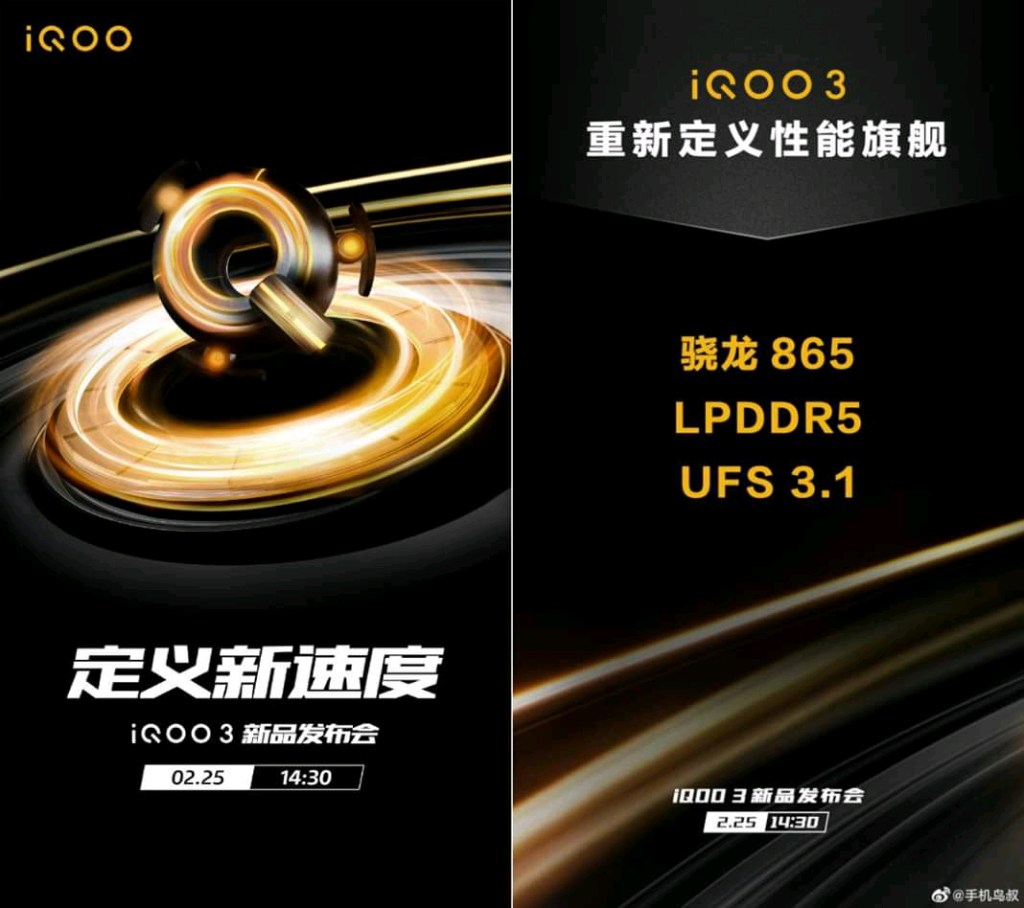
Vivo‘s sub-brand for premium smartphones, iQOO, which has already launched a few devices in the market, is all set to launch its next-generation flagship smartphone named iQOO 3 on 25th February in China as well as in India.
Ahead of the phone’s official launch, several key specifications and features of the smartphone have been confirmed by the company. Now, in the latest development, the device has appeared on AnTuTu benchmark, registering the highest ever score.
The iQOO 3 has scored 597,583 points on AnTuTu, making it the highest scoring smartphone on the benchmarking platform so far. Currently, ASUS ROG Phone 2 has been ranked at the top in terms of performance with a score of 507,051. Besides the Realme X50 Pro 5G and Mi 10 series of phones are no less behind.
Along with that, a new leak related to the device also confirms the battery specifications of the upcoming flagship smartphone. It has been confirmed to come with 4,440mAh battery along with 55W ultra-fast flash charge technology. It is claimed to charge the phone up to 50 percent in just 15 minutes.
While the company has not yet revealed the full specifications of iQOO 3, the TENAA listing of the phone has revealed almost everything. It features a 6.44-inch S-AMOLED display with a punch-hole screen that will offer full HD+ resolution of 1080 x 2,400 pixels, an aspect ratio of 20:9 and 120Hz refresh rate.
The phone is expected to come powered by Qualcomm Snapdragon 865 SoC along with 6/8/12 GB of RAM and could be the first smartphone in the world to arrive with the latest UFS 3.1 storage technology.
It will be running the latest Android 10 operating system out of the box. As for the camera, the device could come with a front-faxing camera of 16-megapixel while the rear shell of the device has a 48-megapixel quad-camera system.
As iQOO 3 is set to debut on 25th February in China as well as India, we expect the company to launch a 4G-only variant as well, at least in the Indian market where the 5G infrastructure deployment is yet to take place.
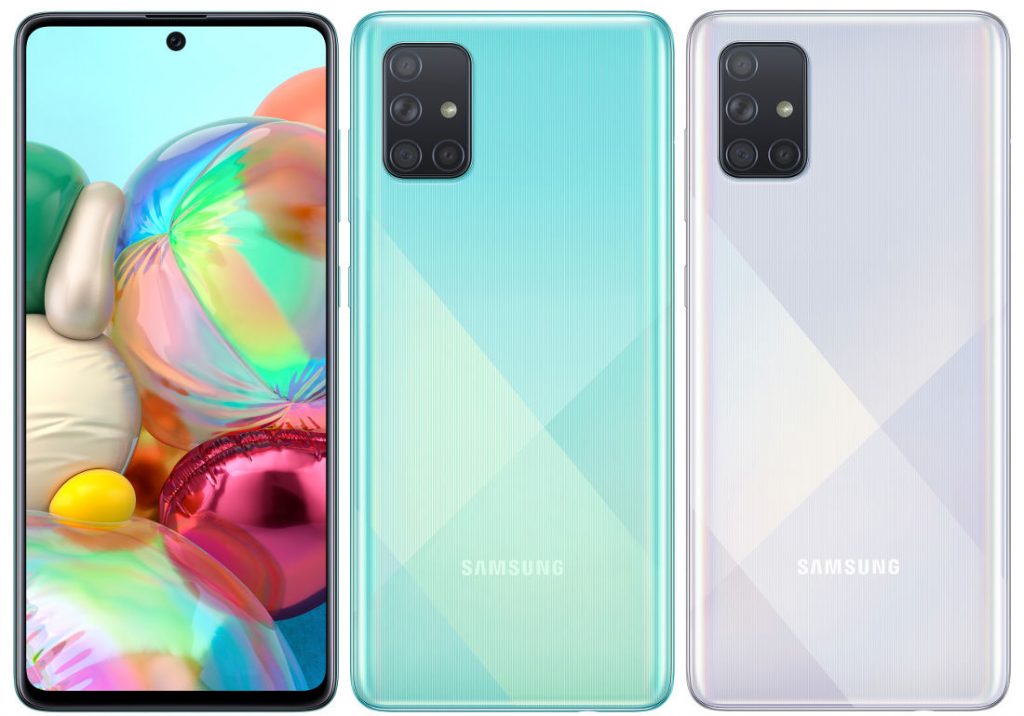
Samsung just launched the Galaxy A71 (SM-A715F) smartphone, the company’s latest smartphone in the ‘A series’ in India after it was announced back in December.
It packs a 6.7-inch Infinity-O Super AMOLED infinity display with 20:9 aspect ratio, is powered by Snapdragon 730 SoC with 8GB RAM, features 64MP main + 12MP 123-degree ultra-wide + 5MP macro and 5MP depth sensors and a 32-megapixel front camera. It has Super Steady Video that eliminates screen flickering when users record videos of a moving object or on the move.
The phone has in-display fingerprint scanner, features dedicated dual SIM and microSD slots, comes with mirror back with diamond patterns and packs a 4,500 mAh battery with 25W super fast charging.
6.7-inch (2400 x 1080 pixels) Full HD+ Infinity-O Super AMOLED Plus screen
Octa Core (2.2GHz Dual + 1.8GHz Hexa) Snapdragon 730 Mobile Platform with Adreno 618 GPU
8GB RAM, 128GB Storage, expandable up to 512GB via micro SD card
Android 10 with Samsung One UI 2.0
Dual SIM (nano + nano + microSD)
64MP rear camera with LED flash, f/1.8 aperture, 12MP 123-degree ultra-wide angle camera with f/2.2 aperture, 5MP depth sensor with f/2.2 aperture, 5MP macro camera with f/2.4 aperture
32MP front camera with f/2.2 aperture
In-display fingerprint sensor
3.5mm audio jack, Dolby Atmos
Samsung Pay
Dimensions: 163.6 x 76.0 x 7.7mm; Weight: 179g
Dual 4G VoLTE, Wi-Fi 802.11 ac (2.4GHz + 5GHz), Bluetooth 5, GPS + GLONASS, NFC, USB Type-C
The Samsung Galaxy A71 comes in Prism Crush Black, Black and Blue colors in India, is priced at Rs. 29,999 and will be available across retail stores, Samsung Opera House, Samsung e-shop and leading online portals starting February 24.
Commenting on the launch, Aditya Babbar, Director, Mobile Business, Samsung India, said:
After the unprecedented success of Galaxy A51, we’re happy to announce the all new Galaxy A71 — a device that lets our consumers do more with their smartphones. With a stunning Infinity-O Display, awesome camera and best in class performance, Galaxy A71 is truly a testament of our relentless effort towards bringing awesome innovations to everyone. With its sleek design and unique Make for India ‘Alive features’, Galaxy A71 will redefine the way millennials use and flaunt their smartphones.
Xiaomi Redmi Note 8 Pro is available at a reduced price for the first time since launch and the last festival sale.
Launched back in October 2019, the Note 8 Pro’ starting price was Rs 14,999, however, during the Amazon Great Indian Festival sale the handset was available with Rs 1,000 discount, post which this is the first time the phone comes for a reduced price seeing competitive brands like Poco, and Vivo coming with their own smartphones with similar specs in the market.
The base variant of the Note 8 Pro with 6GB of RAM and 64GB of storage is available at Rs 13,999, down from the original price of Rs 14,999. Do make a note that only the base variant i.e. 6GB+ 64GB is available at Rs 1,000 reduced price and not the 6GB+128GB and 8GB+128GB variants. Right after the launch, we termed the Redmi Note 8 Pro as the best smartphone available under Rs 15,000. But since then, we have seen several launches like the Vivo U20 and even the Realme X2. Should you pick up the Redmi Note 8 Pro at Rs 13,999? Read on to know more.
The Redmi Note 8 Pro features stellar hardware for a mid-range smartphone. While smartphone brands are providing the glass-clad design with phones above Rs 15,000, Xiaomi managed to deliver the same under Rs 10,000. The Redmi Note 8 Pro features a glass back and it comes in four colour options- Electric Blue, Gamma Green, Halo White and Shadow Black. On the front, the phone sports a 6.53-inch Full HD+ display with HDR10 support and Corning Gorilla Glass 5 protection. It is an IPS LCD panel but offers decent viewing angles and produces good colours.
Under the hood, the phone has the MediaTek Helio G90T chipset, paired with 6GB of RAM and 64GB of onboard storage. There’s also dedicated microSD card slot for storage expansion up to 512GB. The phone offers excellent performance throughout the entire period since launch and the battery life is also pretty good. The phone comes with a 4500mAh battery and Xiaomi has included an 18W charger inside the retail box. Very recently, the phone received MIUI 11 update based on Android 9 Pie; This update made the phone even better as the animations have been tweaked. Sadly, the update is still based on Android 9 Pie, but we are expected Android 10 update to reach the Redmi Note 8 Pro in the coming weeks.
Games like PUBG Mobile and Call of Duty played on the Redmi Note 8 Pro, and the phone never hung showed handling them with ease. In PUBG Mobile, you can even play the game Smooth+Extreme settings which deliver 60fps gameplay.
Moving onto the cameras, there are the best in the segment. The Note 8 Pro has a primary 64MP Samsung ISOCELL GW1 sensor, paired with an 8MP ultra-wide-angle sensor, 2MP macro sensor and a 2MP depth sensor. On the front, the Note 8 Pro has a 20MP shooter. The Note 8 Pro’s primary camera captures some really good images in daylight, but the performance deteriorates when the light goes down.
There are two downsides with the Redmi Note 8 Pro- the fingerprint scanner placement and the lack of AMOLED display. But the phone compensates the downsides with a stellar performance, especially in the price range.
Redmi Note 8 Pro vs Realme XT: Which One to Choose
The Redmi Note 8 Pro faces stiff competition from the Realme XT whose base variant with 4GB of RAM and 64GB of storage also received a Rs 1,000 price cut. The Realme XT is currently retailing for Rs 14,999. However, the Redmi Note 8 Pro is an overall better smartphone, thanks to slightly better cameras, stellar performance and optimised software.
The Realme XT scores big on two fronts- AMOLED screen and in-display fingerprint scanner but lacks on other aspects compared to the Note 8 Pro. Overall, you can choose the Redmi Note 8 Pro as your next mid-range smartphone under Rs 15,000.

























![OnePlus expected to unveil a new concept device on March 3 [Updated]](https://geekspot.tech.blog/wp-content/uploads/2020/03/3abfb-pzd11ryn.jpeg?w=800&h=600&crop=1)



















![Realme band with AMOLED screen launching in India on March 5 [Updated: New Colors, Cricket Mode, IP68 Rating]](https://geekspot.tech.blog/wp-content/uploads/2020/03/1bcab-realme-band-1024x629-1.jpg?w=800&h=600&crop=1)


















 GeekSpot